What is an IT company and an IT product?
First, let's clarify what makes an IT company different from a regular one. Can you call any company that uses computer technology in its work an IT company?
An IT company is a company that develops, tests, implements, sells, and/or supports IT products or services.
An IT product is a bundle of software, hardware, or software-hardware information technology solutions designed for direct use by the consumer or for integration into various IT systems. An IT product can be sold or leased to the consumer.
As you can see, not every company is an IT company. For example, using software in your business is one thing, but producing or providing service support for an IT product is another. In the latter case, your work boils down to delivering an IT service to the end user.
Promoting an IT company ultimately comes down to attracting new customers - either for the company itself or for its product.
Which methods are worth using to promote an IT company, and what goals should you set? Let's walk through the most effective channels for promoting an IT company using our own projects as examples.
For IT companies (and for many other companies), the website is a priority source of potential clients.
That's why it's critical to design an effective digital strategy from the start.
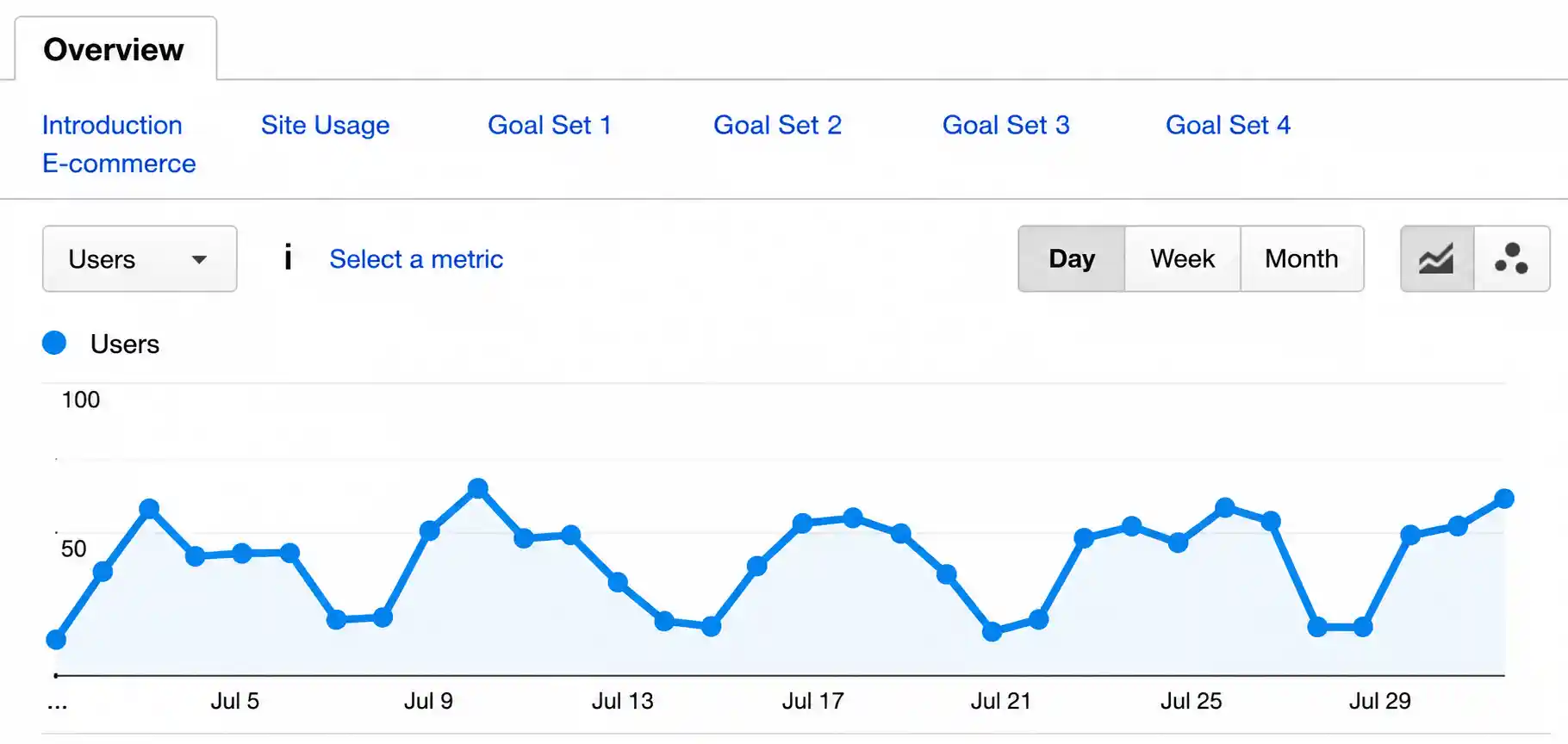
Before setting goals, you need to measure your baseline. For example, if you want a certain number of visitors or leads per month, or want to set any other goal, you have to measure current metrics first.
In our case it looked like this:
-
10 visitors per day (across all channels)
-
20 visitors per month from Google Search
-
up to 2 leads per month
-
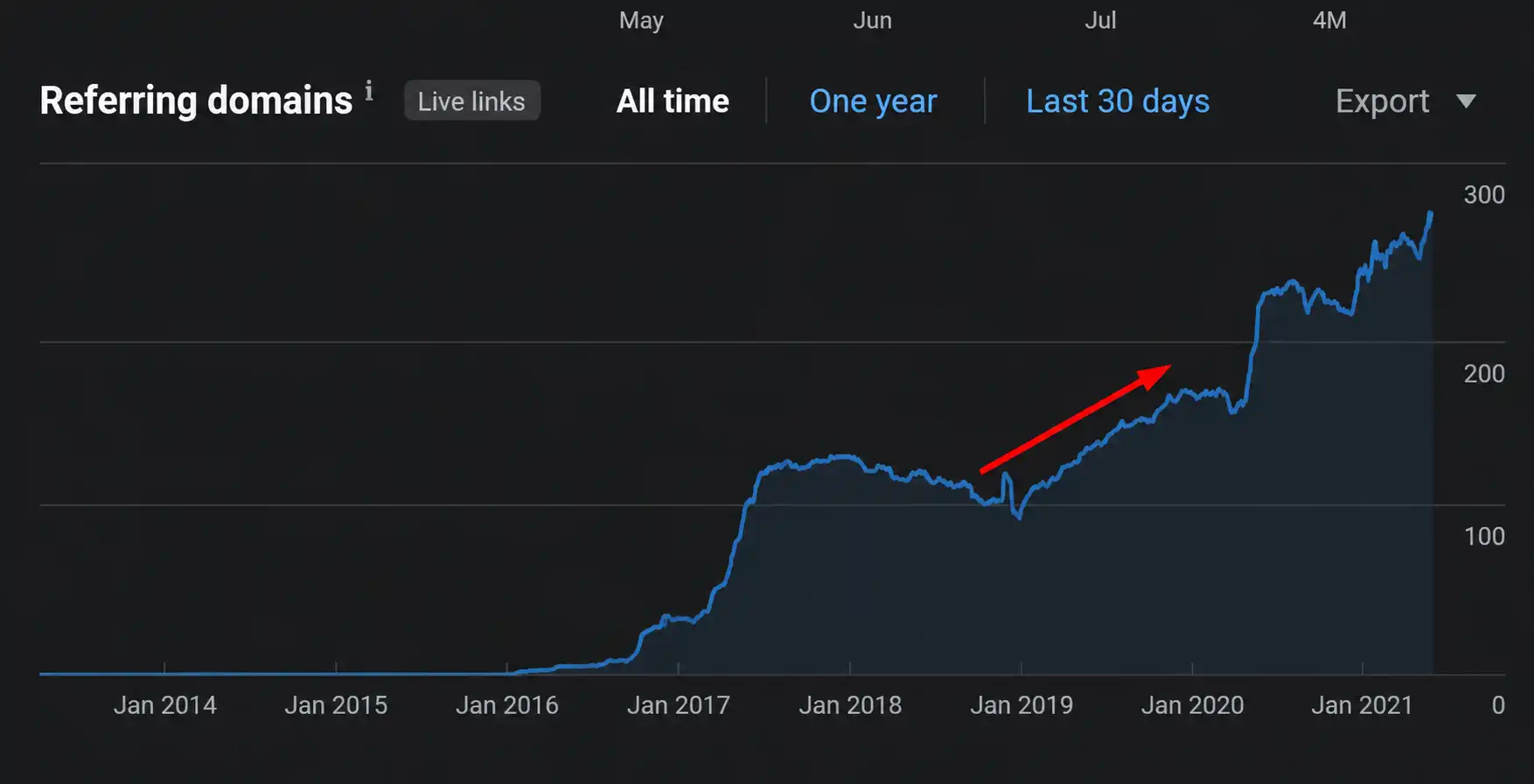
no referring pages (zero external backlinks)
-
5 blog posts
July 2018 - before promotion started (50 visitors per day before promotion):
Setting goals the right way
What criteria does a goal absolutely have to meet?
A goal needs to be specific, measurable, achievable, meaningful, and time-bound.
Using these criteria, we set the following goals for our IT project:
-
grow traffic by 10% month-over-month;
-
generate 50 leads per month within the first six months of promotion;
-
increase site conversion from 0.5% to 2% within three months;
-
publish one expert article per week;
To hit these goals, we put together a clear, detailed promotion strategy.
Promotion strategy
Based on our experience, we focus on building a strategy around the channels that actually work:
- SEO
- PPC advertising
- Social activity
SEO is the work aimed at growing traffic from search engines. Organic search is the first tool a genuinely interested user reaches for. That makes it one of the highest-converting channels - provided you're at the top of the SERP for the right queries.
Channel upsides: a growing flow of engaged visitors, long-term results, affordable cost per conversion, and brand awareness lift.
PPC advertising is paid acquisition of potential clients to your site. Its strength is delivering revenue quickly.
Upsides: fast order flow. The channel starts working right away, and you can assess effectiveness within a month. Ads are easy to manage - you can adjust strategy, budget, targeting and so on on the fly.
Social activity is promoting the company across social networks to build a loyal audience and lift brand awareness.
Upsides: higher trust in your content and fast feedback from the audience.
Important
Experience comes first. Any channel needs an experienced specialist running it - otherwise you risk burning the budget without results.
Let's take a closer look at the specifics of promoting IT companies on each of these channels.
SEO for IT companies
We start search promotion with an analysis of the competitors at the top of Google. Based on what we find, we think about what we can improve on our side:
-
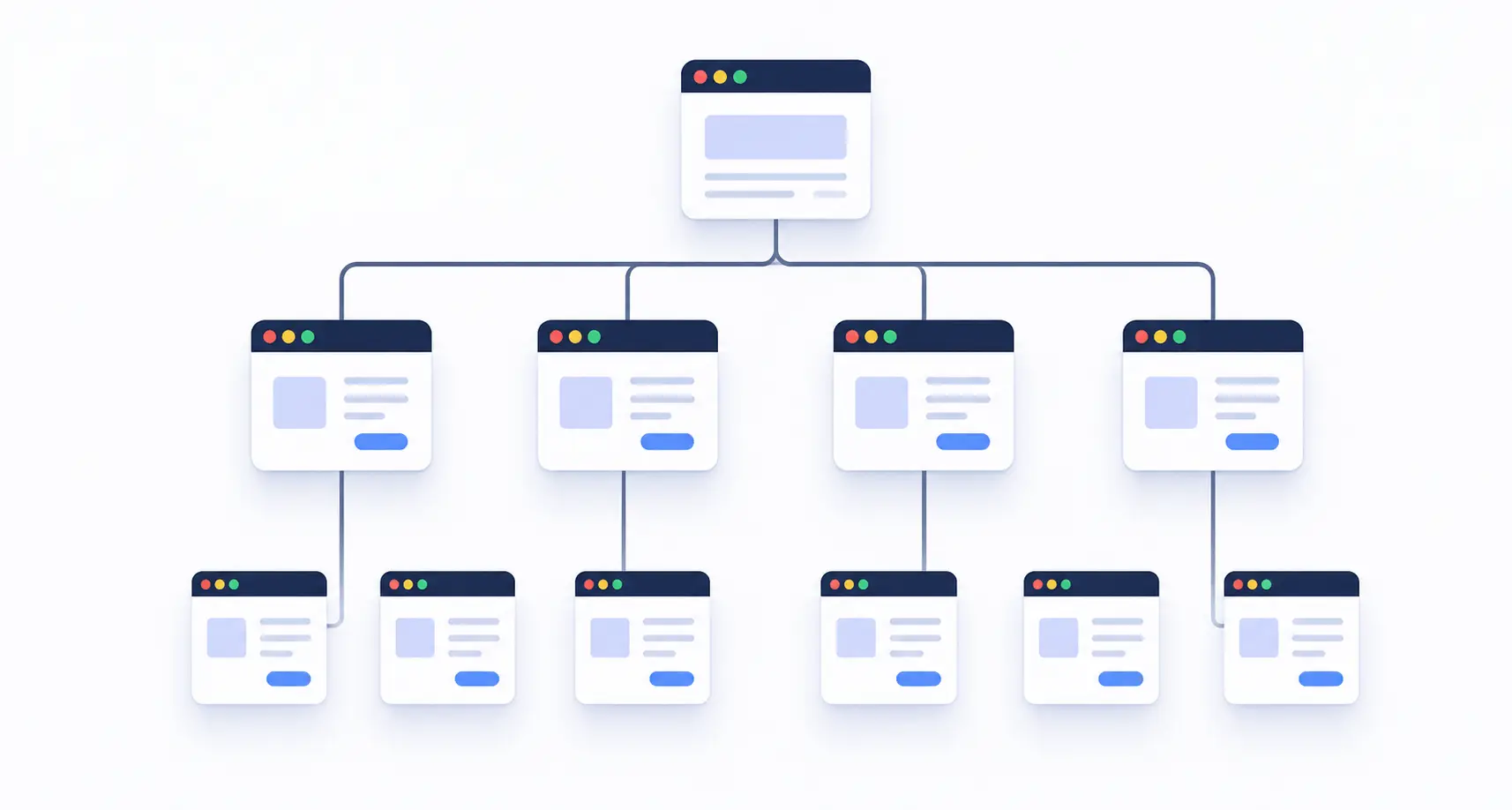
We look at the structure of competitor sites: which categories do they have? How can we expand our own structure?
-
What are the technical characteristics of these sites? For example, which schema markup types are implemented, how the markup is built, what the loading speed is, and other details.
-
We analyze the competitors' backlink profile. How can we improve ours? What types of links should we aim for? What link volume should we target? From which types of domains, and so on.
-
We look at content presentation and site usability. We'll review your site and improve usability where needed.
-
We look at social activity metrics: which networks are competitors active on? How active are they?
In parallel we analyze search demand and build the semantic core.
Search query analysis and clustering
We start with the search query analysis. We split queries into:
-
conversion-driven;
-
niche;
-
long-tail;
-
informational.
For example, an IT company offers mobile app development services for Western markets. Which queries do we work on?
Examples of high-volume queries: the query «App development» has high volume but is too broad. So it should be a priority in SEO, but avoided in paid ads because of low conversion and high cost.
Examples of conversion queries that work for ads: app development cost, ios app developers, application developers need, mobile development company.
Examples of informational queries: HTML5 App Development, Objective-C development. These queries work for general reach, attracting additional loyal audiences, and ultimately lifting brand awareness.
Examples of niche queries: taxi app development, development of CRM system, and so on. These queries are perfect for building conversion landing pages and for use in paid ads.
Important
A common mistake is chasing traffic instead of conversions. Promoting around high-volume, overly broad queries cuts conversion chances in the IT vertical. If you want to bring in leads, make your target queries as specific as possible when planning promotion and topics for landing pages.
Expanding the site structure

After analyzing competitors and building the semantic core, we think about how to expand the structure. This can include:
-
Creating new service pages. This might be a new business direction (for example, IoT app development).
-
Building a business solutions section. The section is built on the company's expertise. For example, you can group niche solutions here (taxi apps, food delivery apps, and so on). Think through which of your services and competencies aren't reflected on the site, and surface them.
-
Setting up a blog. Running a blog - whether news or expert articles - has a positive impact on promotion. First, it signals to the search engine that the site is «alive», and it ranks it higher, which means you bring in more visitors. Second, a blog is a trust signal for visitors - they see that the company is active, growing, and showing its expertise.
What expanding the site structure gets you:
-
First — improved search visibility on new query groups;
-
Then — a flow of users genuinely interested in your expertise;
-
As a result — conversion rate on the site goes up when the page structure is properly designed.
On-page optimization
Once the site structure is in place, we have to clean up the technical side and run SEO optimization.
1. Technical optimization
This covers:
-
no broken links or duplicate pages;
-
correct HTTP responses for pages;
-
URL optimization;
-
SEO-friendly markup: tag optimization, layout of site blocks;
-
page load speed optimization;
-
mobile version optimization;
-
Sitemap.xml and Robots.txt optimization.
2. On-page optimization of landing pages
Optimization work covers:
-
Headings — the most important elements on a page, they need to be relevant to the search queries.
-
Meta tags (Title, Description, Alt) — need to contain target queries and look compelling.
-
Page text. The text should be useful to the reader, relevant to the queries, and at the same time not read as spam.
-
Page structure. The information on the page should give the visitor a complete answer as fast and simply as possible. To do that, we use different content types: text, lists, images, graphics, tables, video. The more varied the format — the easier it is for the user to navigate the article. Search engines rate sites with useful, engaging content higher.
3. Internal linking
The goal of internal linking is to make navigation easier and to push the pages we want to rank.
So we need to keep two core criteria in mind:
-
User aspect. The site structure should make finding information easier for visitors. Think about where it's best to place a link so it's useful in context. You also need to consider what's relevant for the user at that moment — additional reference material or a link to a similar service.
-
SEO aspect. When you build internal linking, you're moving link equity between pages. The more pages link to a given one, the more weight it carries and the better it ranks. With a smart distribution of link equity you can push higher-priority pages. When designing the linking scheme, it's also worth thinking through the site as a whole so the equity is distributed as evenly as possible.
Off-page optimization
Search engines consider not only on-page factors, but also off-page ones — mentions of the site and links pointing to it. For a search engine, the more a site is talked about and linked to, the more authoritative it is, and the more it deserves to rank higher. At the same time, the links need to come from authoritative sources and be topically relevant.
Criteria for a sound link strategy
-
Link sources need to be diverse. For example, links from blogs, catalogs and directories, social networks, authoritative industry sites, and so on. The more variety — the better.
-
Links need to look natural. For example, links can come not only from text, but also from images.
-
Anchor links shouldn't read as spam or promotion. The recommended ratio is at least 70% non-anchor links. The rest — anchor links and natural ones like «here», «on the site», and so on. Otherwise you can run into search engine penalties.
To better understand how to build off-page optimization, you need to analyze your own profile (if the site isn't brand new) and the competitors' link profiles. From that we can learn:
-
the total link volume for you and your competitors;
-
which sites' links are used most often;
-
the ratio of anchor to non-anchor links;
-
whether there are broken links and how new links are trending;
-
the most common anchors and much more.
From this analysis we put together a link building strategy.
Example goals for building a link strategy
-
Reduce the share of anchor links from 40% to 20%.
-
Increase the number of targeted anchors depending on query positions.
-
Increase the diversity of link sources. For example, get more links from catalogs, blogs, and forums.
-
Set a pace of at least 10 new links per week.
-
Get more links from images, and so on.
Each project can have its own goals depending on the current situation. Based on these general goals, we put together a monthly link acquisition plan and track its effectiveness.
Most popular link sources for IT companies and beyond
-
Guest links. These are the most valuable, because they're the hardest to get. But if you have links like these from quality sources, your chances of moving up in search are higher.
-
Industry catalogs, directories, and rankings. For IT companies these are exceptionally valuable sources of quality traffic. For SEO specialists this is an added plus.
-
Crowd marketing (links from forums and discussions). These links are valuable for how natural they look to search engines, and with the right strategy they bring in real potential clients.
-
Classified ad sites. These links are very easy to acquire and help diversify your link profile.
-
Links from social networks. They lift your authority both in the eyes of search engines and in the eyes of potential clients.
-
Local SEO (Google My Business). This is a separate promotion channel for local and regional businesses. It's free, fast, and effective. Strongly recommended for any company with a physical office.
-
Content marketing and video content production. Another standalone promotion channel. In IT, demonstrating your expertise matters, and expert articles and video content have a significant impact on audience loyalty. On top of that, this gives an extra bonus in the eyes of search engines. The only downside — producing quality content takes time and the right specialists. But with systematic work, the result is guaranteed.
PPC advertising for IT products
Paid search is the first channel that starts generating revenue right after launch. But for the channel to work effectively for IT products, you have to follow some rules:
-
Segment queries by service type. In our case, for example, we split queries by product type: «app development for restaurants», «app development for taxi services», «app development for clinics», and so on.
-
Prioritize long-tail queries. Pick more narrowly targeted queries for ads. For example, it's better to use «Android app development cost» than the broad «app development».
-
Conversion queries. Where possible, use queries with modifiers like «cost», «company», «order», and so on.
-
Use remarketing wisely. Don't run ads for everyone who's been on your site. It's better to segment the audience around «everyone who didn't convert», and to choose your own segmentation criteria depending on the business and user behavior.
-
Analyze metrics carefully. Only continuous query and conversion analysis, with optimization driven by metrics, brings results. For example, you can track and scale based on success:
-
which queries drive the most conversions;
-
which ads are getting traction and which phrases pull the most attention;
-
which non-target queries are eating your budget and need to be added as negatives;
-
what the average cost per conversion is and how it shifted after the landing page improvements;
-
which devices people most often use to come from ads — this helps optimize bids;
-
and many other indicators.
With the right account structure and a sound approach to optimization, you'll get an effective channel that pays back the investment soon enough.
Social activity
The IT vertical particularly needs a loyal audience. IT companies that want to establish themselves in the market have to earn user trust. You can't ignore social activity. The more social channels you use, the wider your reach and the more stable the results you'll get.
We recommend the following sites that have proven themselves in IT business promotion:
-
GitHub. Geared toward the developer community. The channel needs experts involved.
-
Stack Overflow. A Q&A system about programming. Same story — needs an expert in the loop.
-
Behance. Creative portfolios you can use to showcase products and companies, and to attract target clients.
-
Dribbble. A platform for self-promotion by designers and creatives. Works very well as a lead generation channel.
-
Clutch.co. A referral platform for verified developers. Great for self-promotion for IT companies targeting Western markets.
-
Quora. A Q&A service across many topics, including IT. It calls for experts to give detailed, competent answers. Takes time and effort, but it's worth it.
-
Habr. An information portal for IT developers. Only quality content gets traction. Being active in this community is a major plus for both SEO and brand awareness.
-
LinkedIn. A business platform for hosting company profiles and job search. Presence here is recommended for raising brand awareness.
-
Facebook. A popular social network offering both paid and free advertising options.
One thing worth calling out separately is taking part in various conferences, seminars, and other events in the IT space.
Companies very often ignore the chance to make a name for themselves offline — and they shouldn't. Participating in industry communities is a powerful channel for:
-
getting new business contacts;
-
building connections with potential clients;
-
gaining valuable experience and expanding your own expertise;
-
learning about new offerings from competitors;
-
further strengthening your community and promoting the brand.
Industry events can be not only offline, but online too. Webinars and courses, for example. Participating as a speaker or expert is also a major plus for an IT company's brand, because word of mouth is a powerful tool.
Conclusions
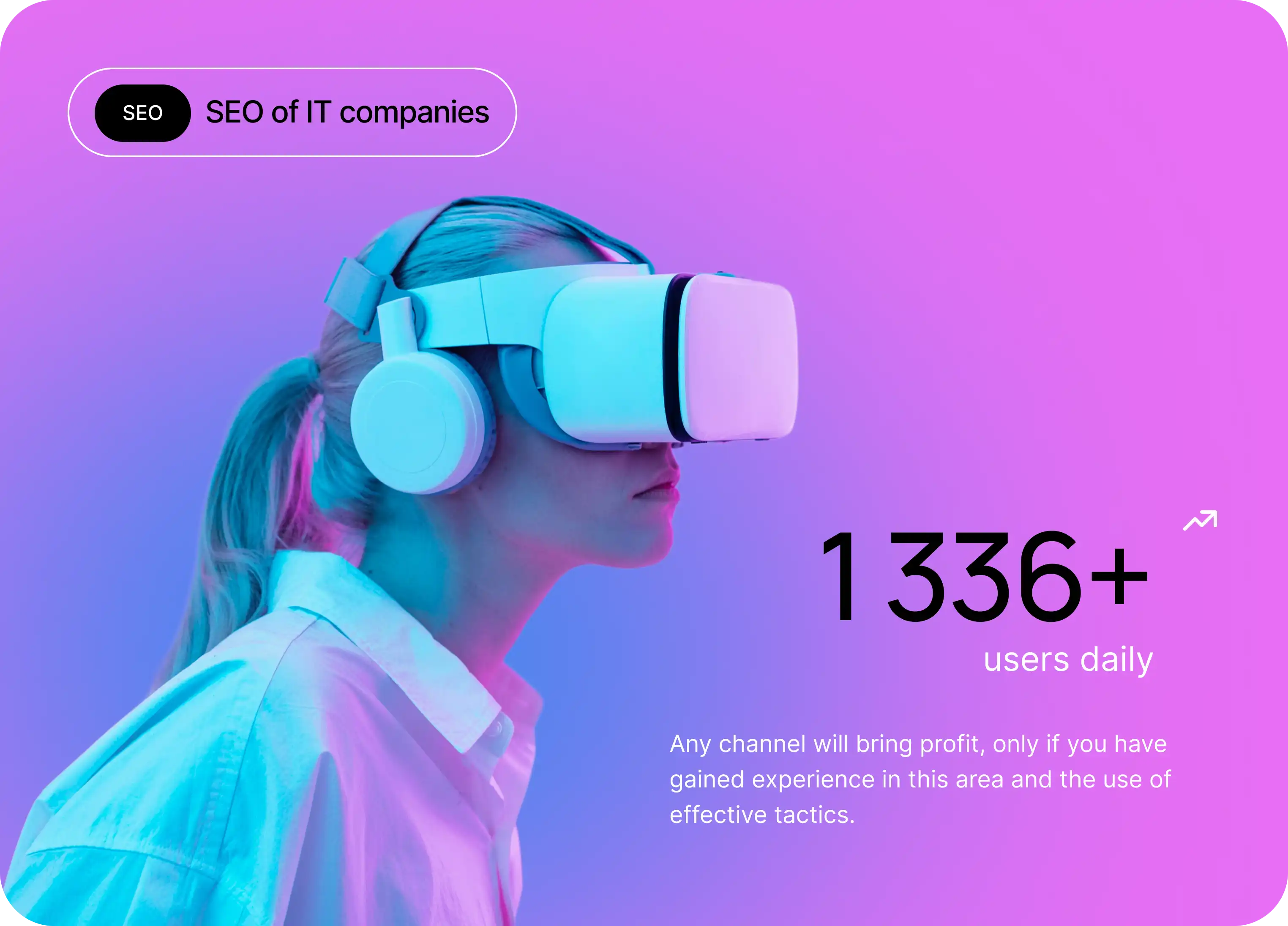
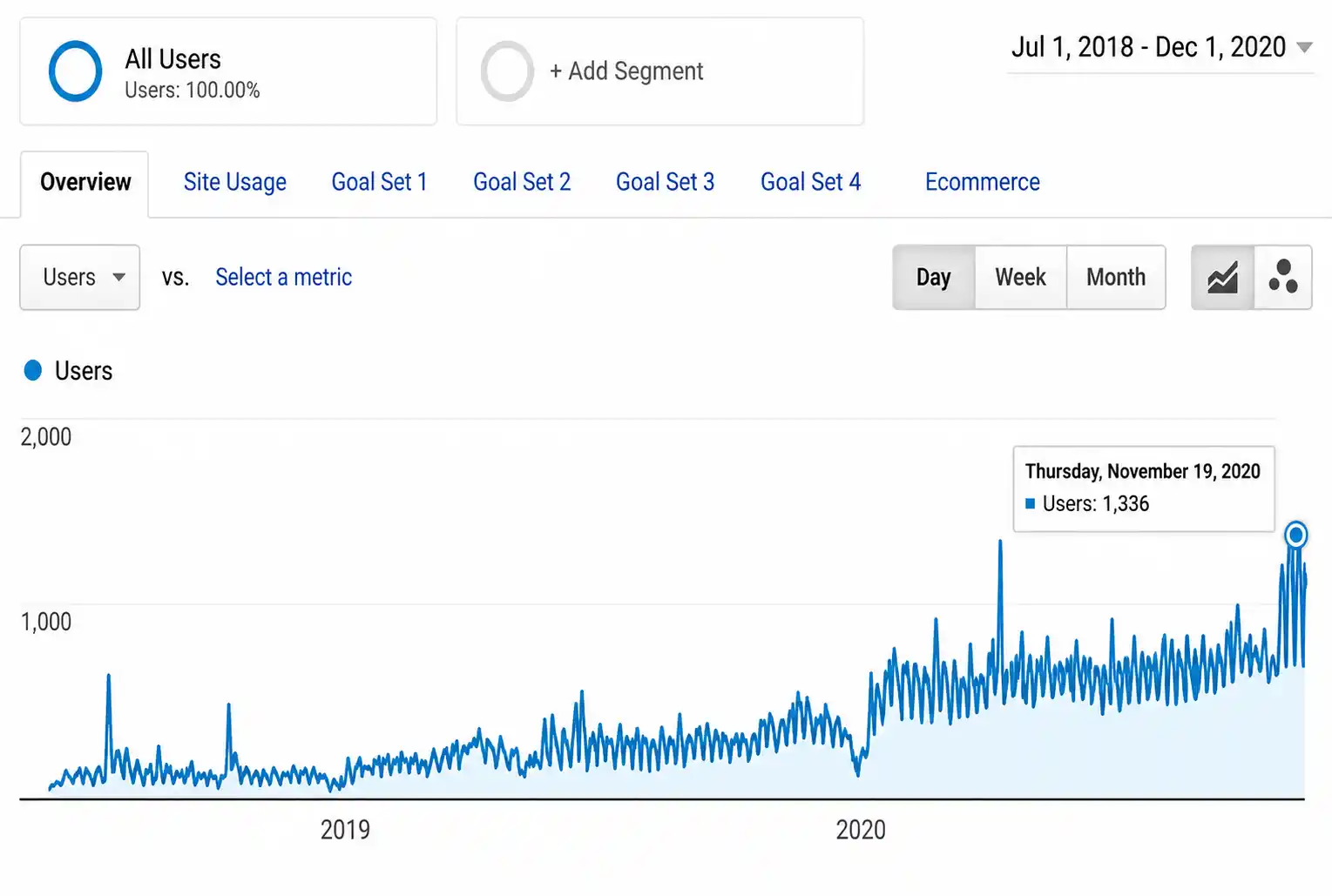
So, to wrap up. The thing to focus on is profit, not traffic. That means carefully analyzing growth points and maximizing them. Any channel will generate profit only if you build up the experience in that area and apply effective tactics. Worth noting that the most effective channel in the long term is organic search (SEO). IT companies are strongly advised to use this channel when promoting their site. And it's better to rely on specialists rather than try to handle it on your own.
 SEO services
 Google Ads