This case study shows the right way to approach SEO promotion of an online auto parts store after the site has been built. How to properly handle every important aspect of on-page optimization, build a strong semantic core, and not rush into buying backlinks.
This case will be useful for SEO specialists, owners of online auto parts stores, and anyone who's only just planning to start a business in this field.
You'll also get an answer to why it's worth bringing in a good SEO specialist as early as the moment the idea of starting an auto parts store is born.
Starting data:
So as you can see, the auto parts store came to us at zero across every metric. Unfortunately, the client reached out only after the site was built, so we couldn't walk them through the SEO prep in detail. But we didn't get discouraged and started analyzing the finished product the developers had handed over.
From the very first days after the auto parts store was launched, the client started asking us questions:
The client understood that there was money to be made online in this niche, but had no idea about the traffic numbers of competitors or the niche as a whole.
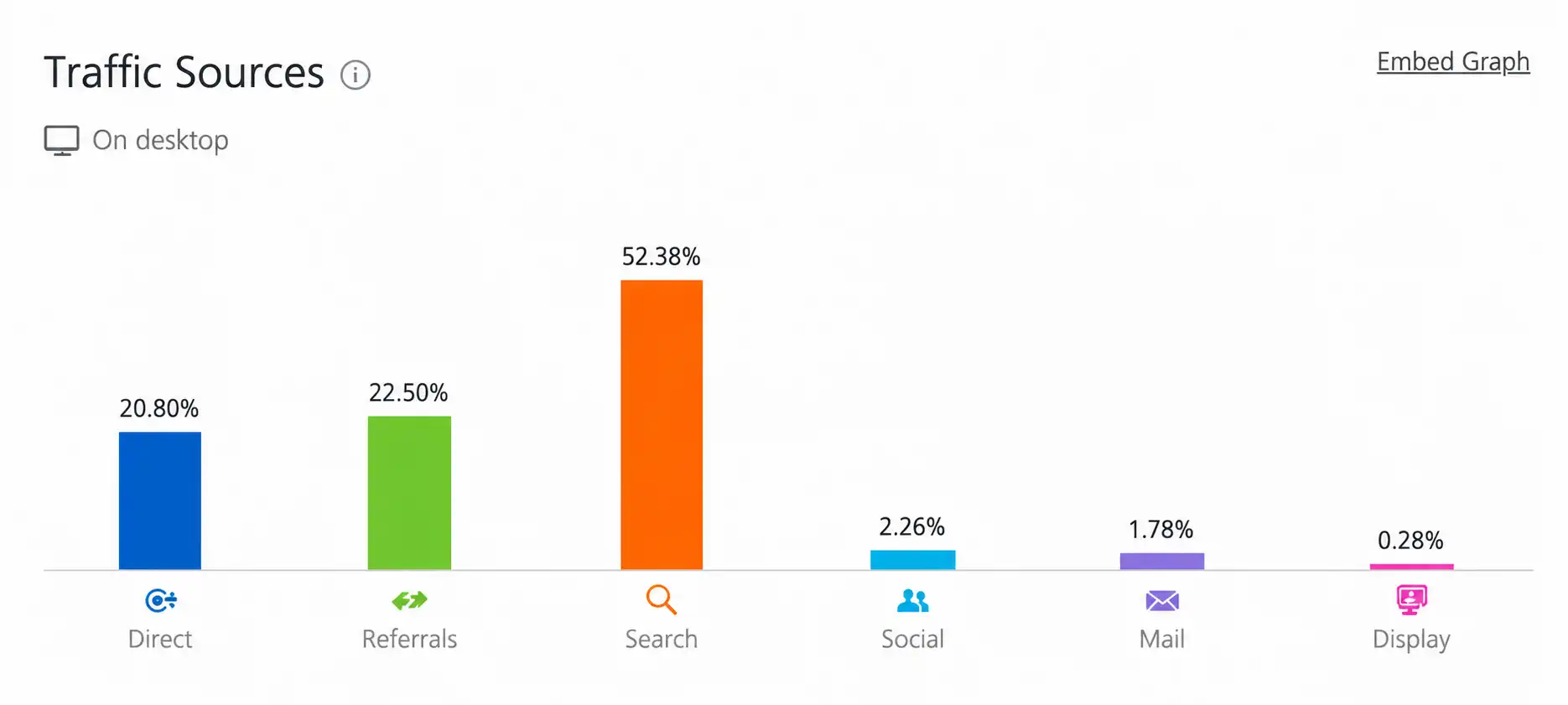
For the competitor analysis, we picked what we considered the 3 leading online auto parts stores and gave a clear assessment of their site visits and traffic channels.
Competitor #1
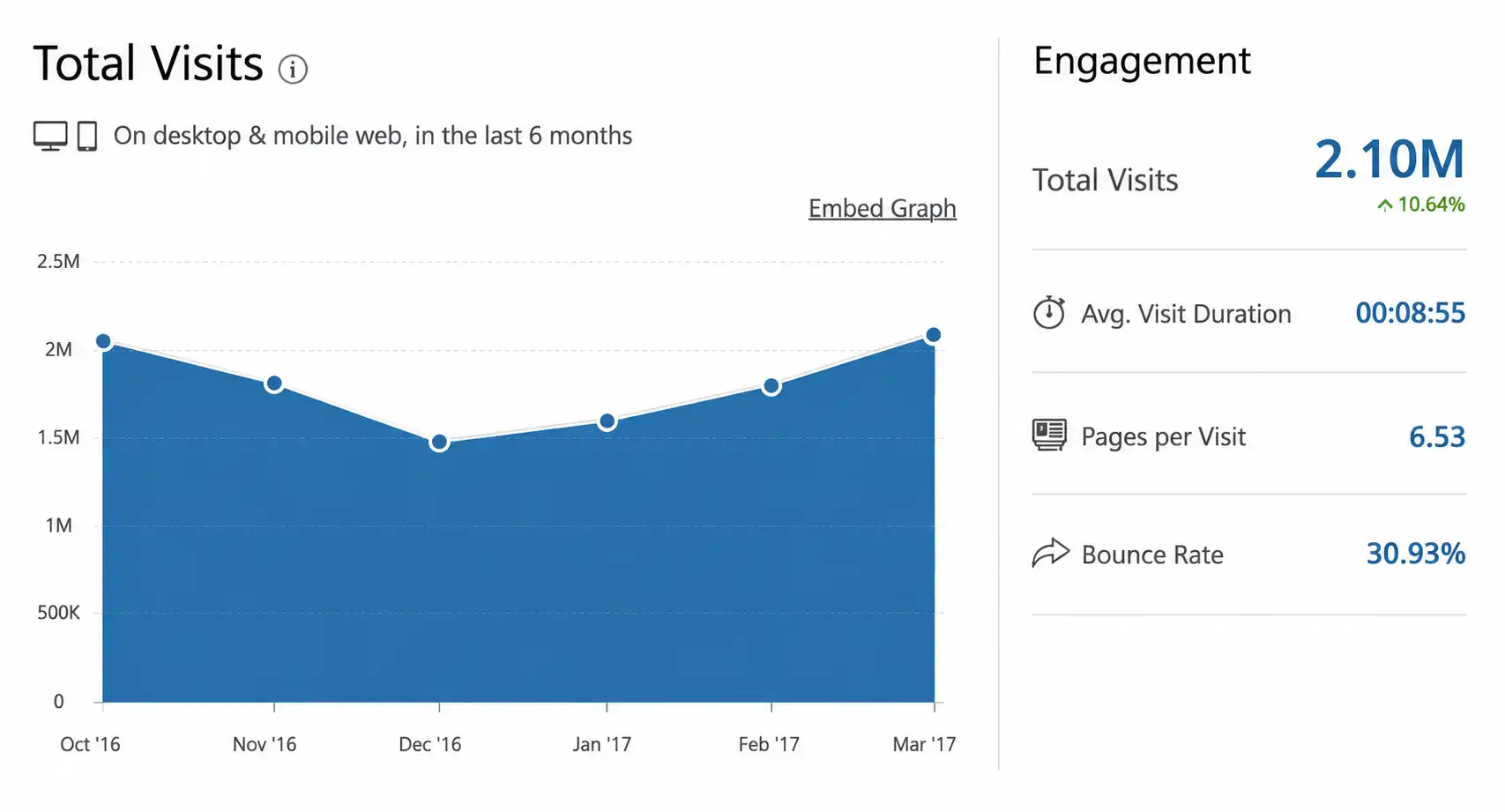
This online store is the unquestioned leader of the niche we picked for an overall traffic assessment in this vertical.
Takeaway for the client:
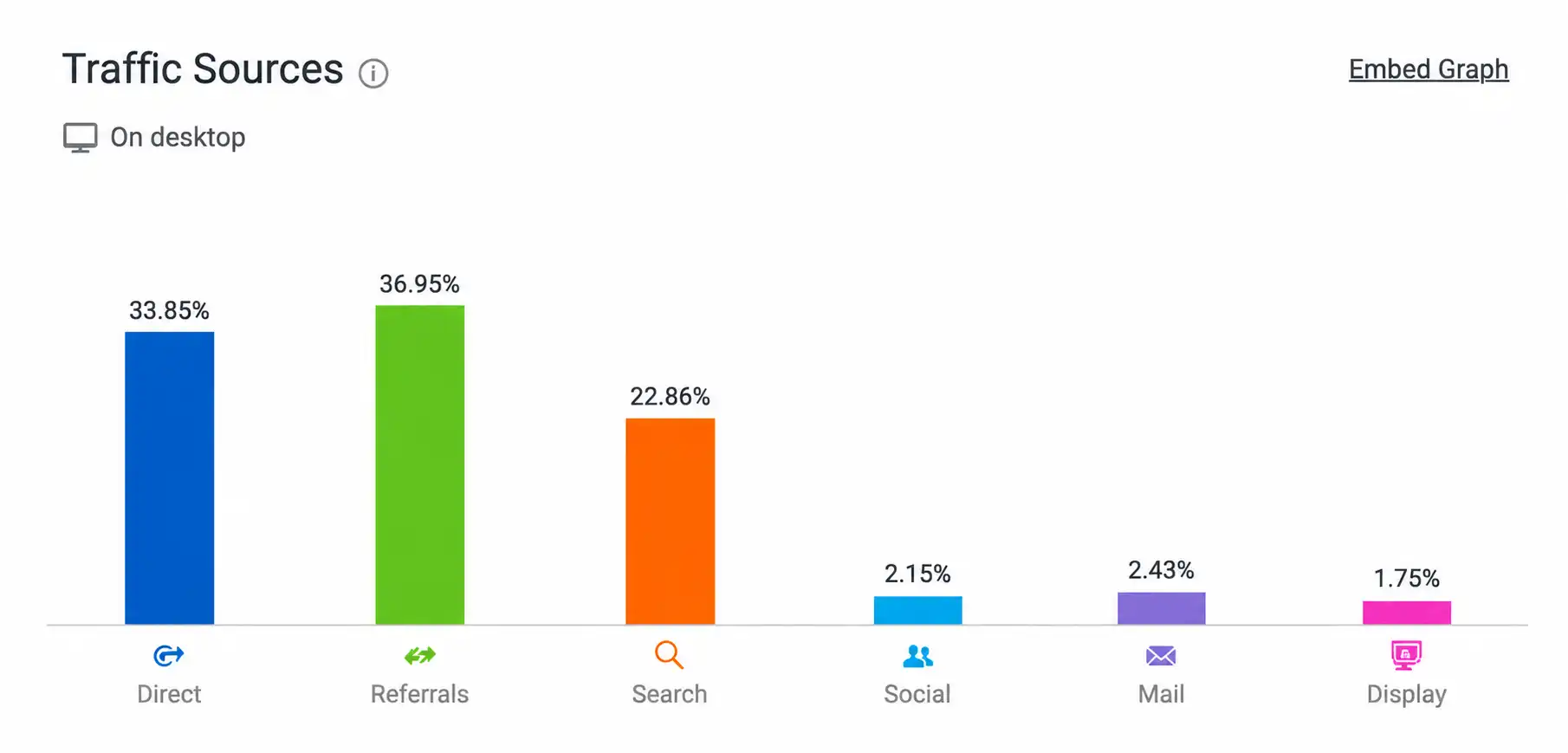
The niche leader pulls in nearly 2,000,000 visits per month, 26% of which is organic - the SEO channel is more than worth it.
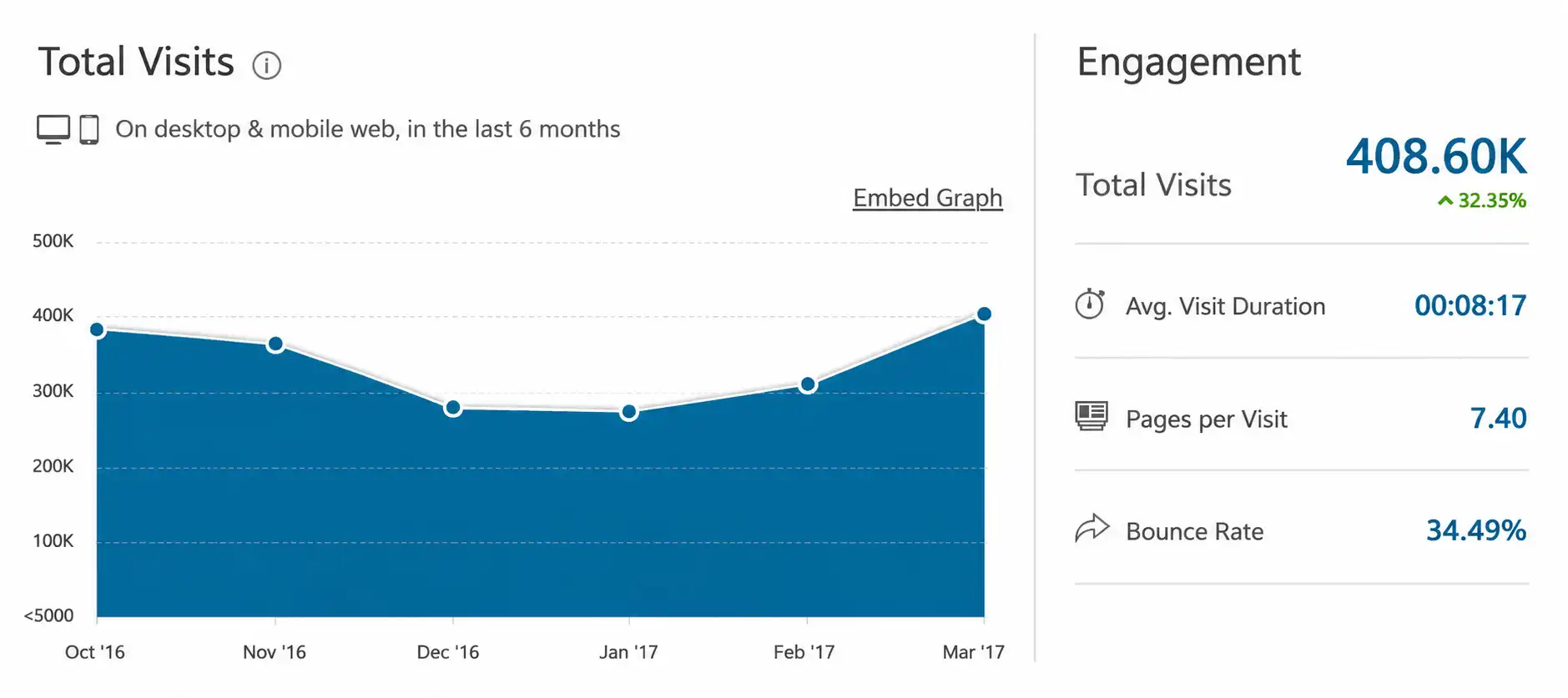
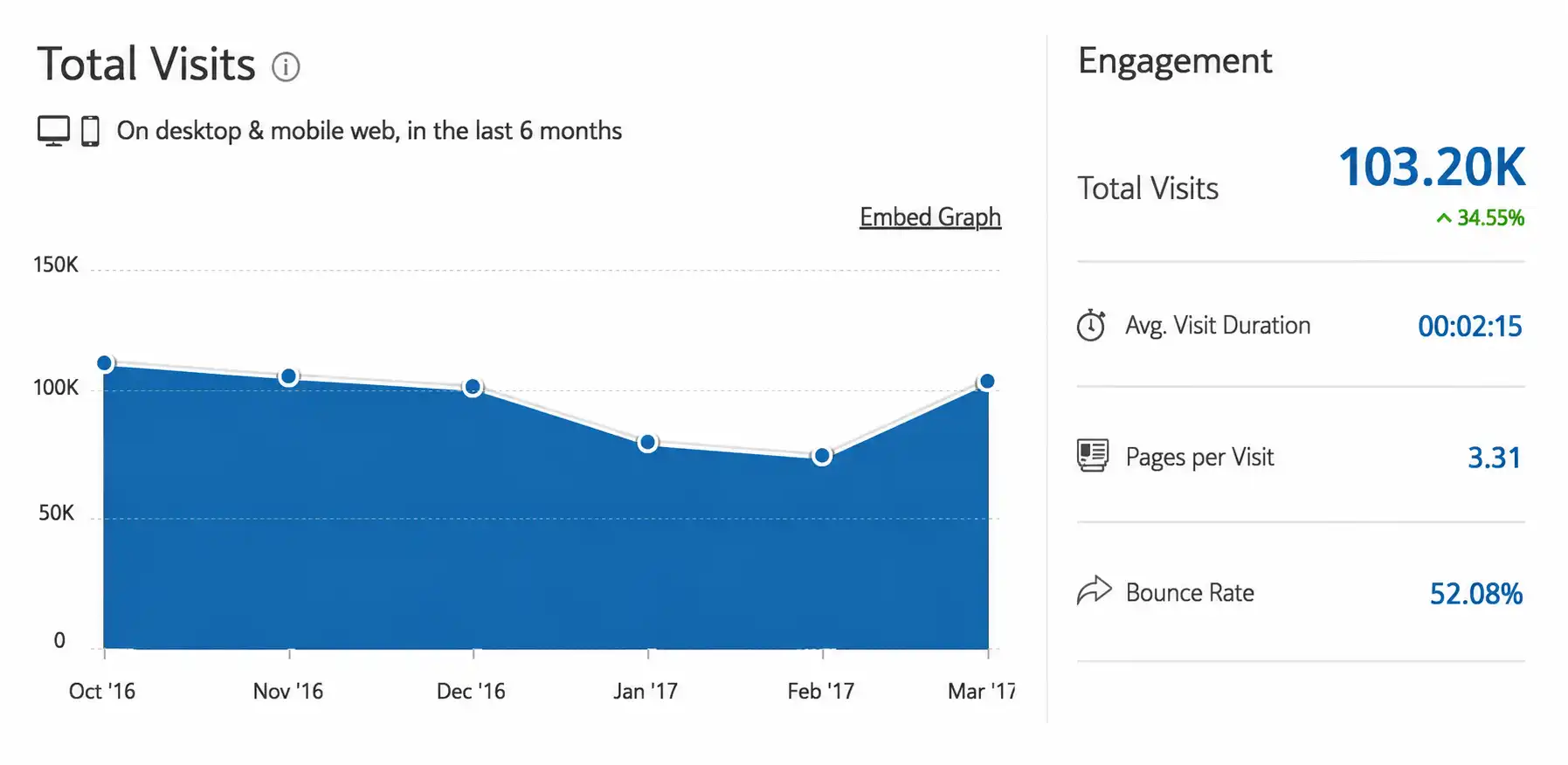
The second and third competitors were picked based on traffic sources where the share of organic traffic outweighs all the others.
Competitor #2
Takeaway for the client:
In the overall picture of traffic sources, organic can take the leading spot. Organic traffic in the automotive vertical is worth giving the maximum attention and time.
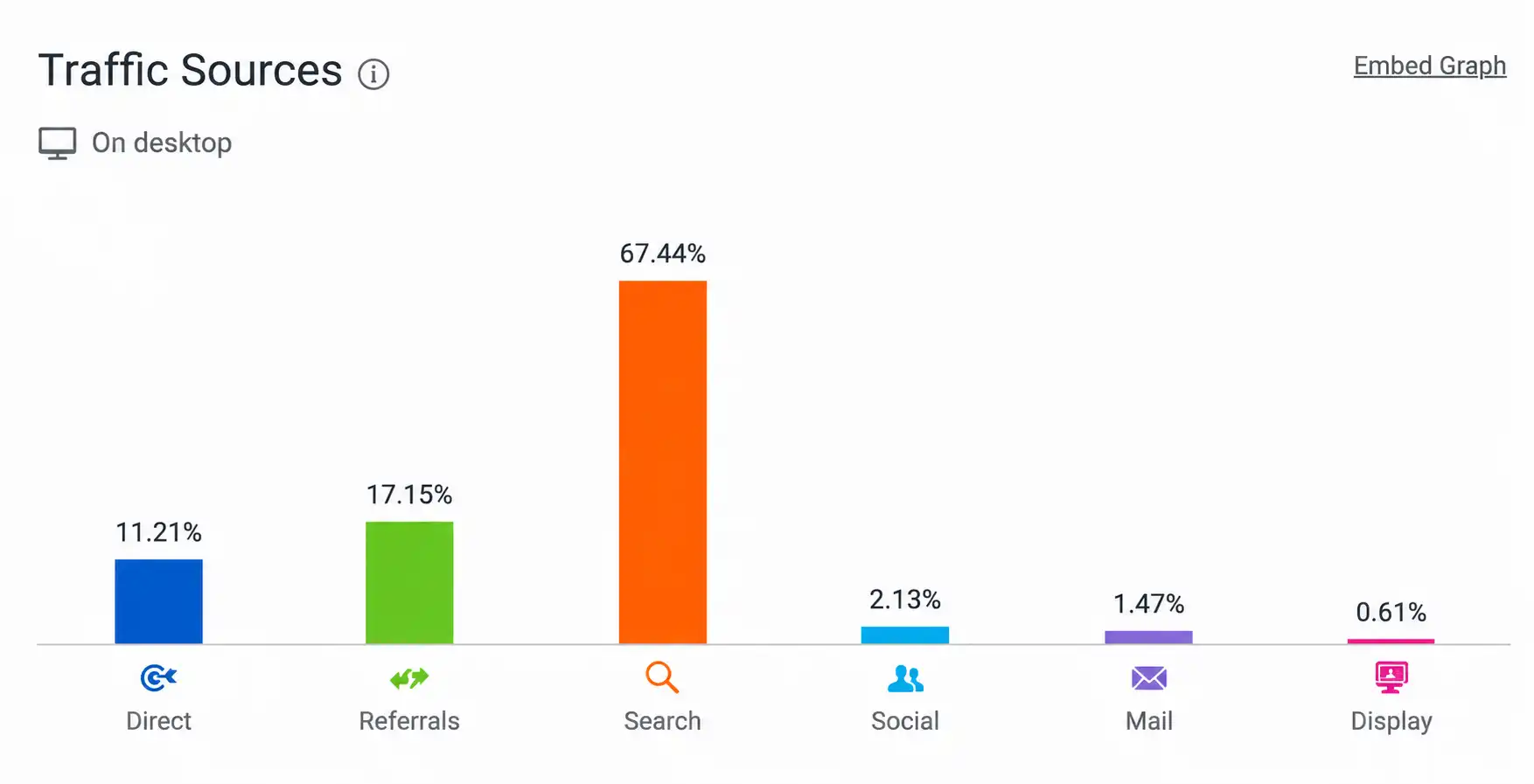
Competitor #3
The most prominent competitor with an organic traffic share over 60%.
Takeaway for the client: as in the second case, organic is the main traffic source.
Project objectives
We had 3 main objectives in front of us:
Run an SEO audit of the site before opening it for indexing. Avoid the kind of major mistakes that could get in the way of further promotion of the auto parts store.
Build a solid semantic core and lay out a plan for developing the site's internal structure. Help the client see that SEO traffic in the automotive vertical can be earned even on the most long-tail queries.
Bring in initial traffic by optimizing the site without growing the backlink mass.
On-page SEO audit of the site
Critical mistakes that were fixed first
- Main domain
The main domain wasn't chosen, the site was accessible with www and without www. We set the main domain to the version without www.
Note
Once a site is built, developers don't bother themselves with the question of which domain will be the main one. In principle this is natural - if a company only does site development and doesn't have its own qualified SEO team, then domain mistakes happen in close to 100% of cases. Reach out to SEO specialists to head off future problems while the site is still being built.
- Site structure
In the ideal SEO-specialist's view, site structure is built around the semantic design of the site. But in our case, the developers had built a classic auto parts store without taking keywords into account.
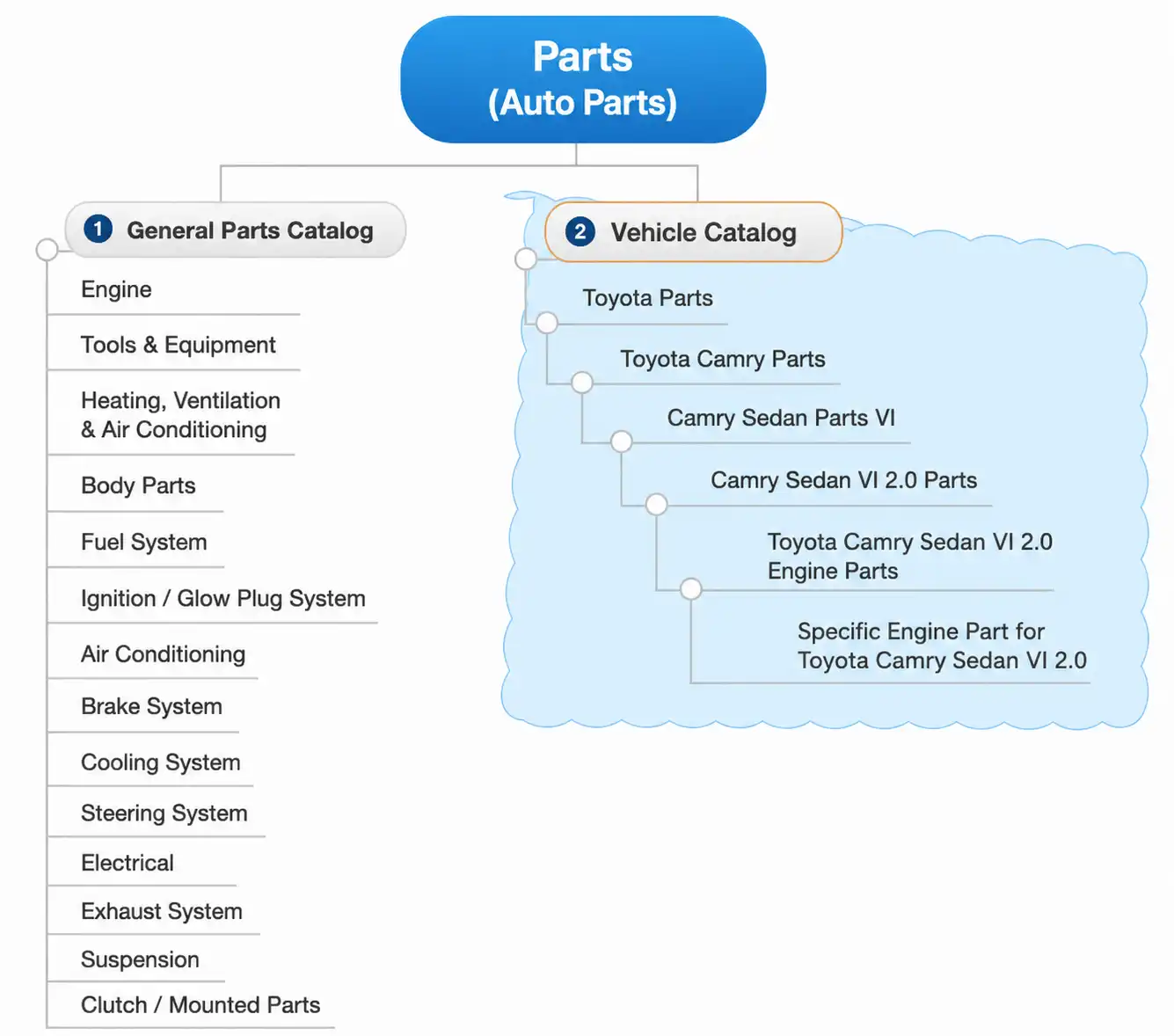
Our auto parts store covered more than 120 car makes, each with anywhere from 5 to 50 models. Each model in turn breaks down into:
series;
production years;
body type, and so on.
The parts catalog already lived under these sections.
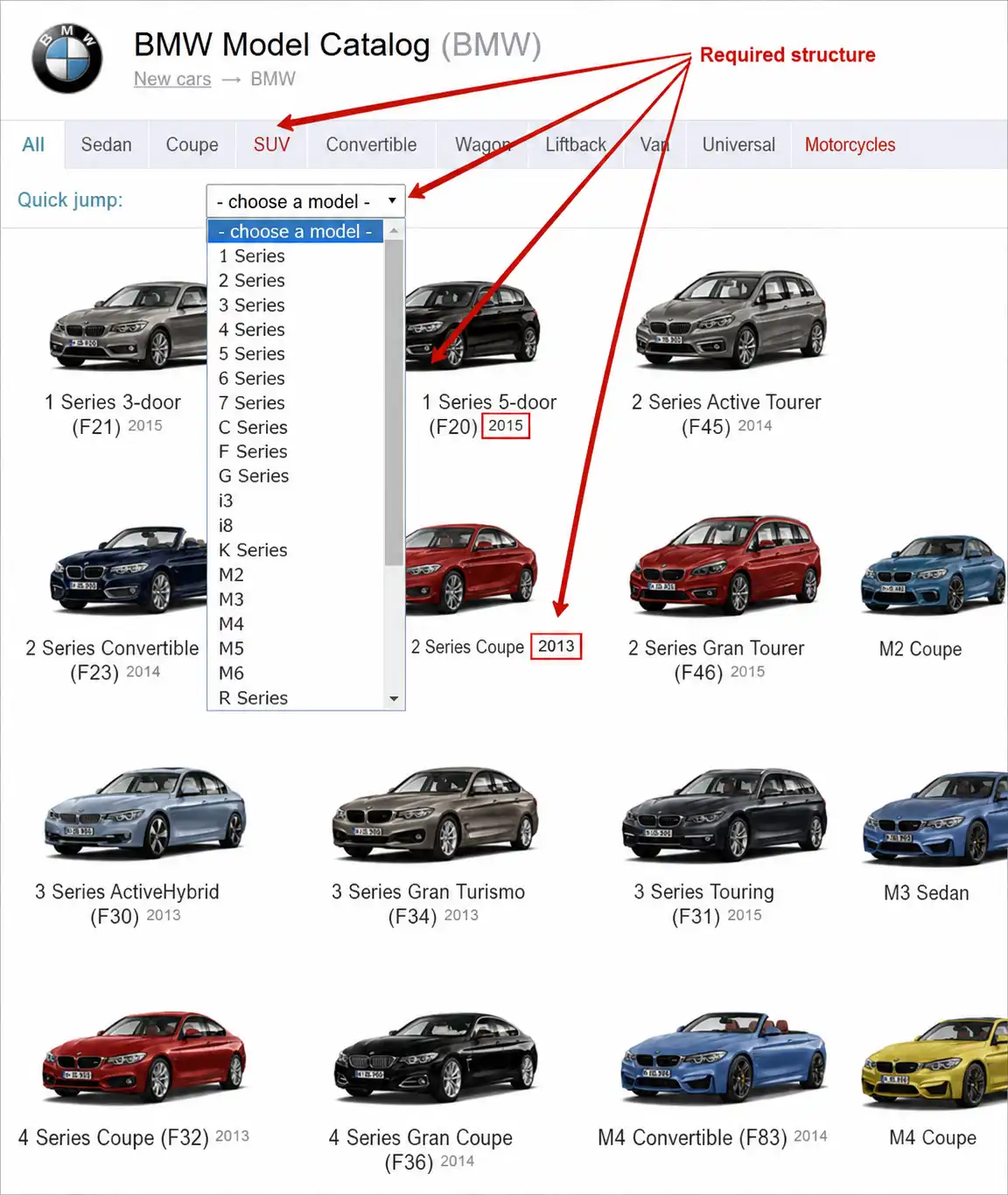
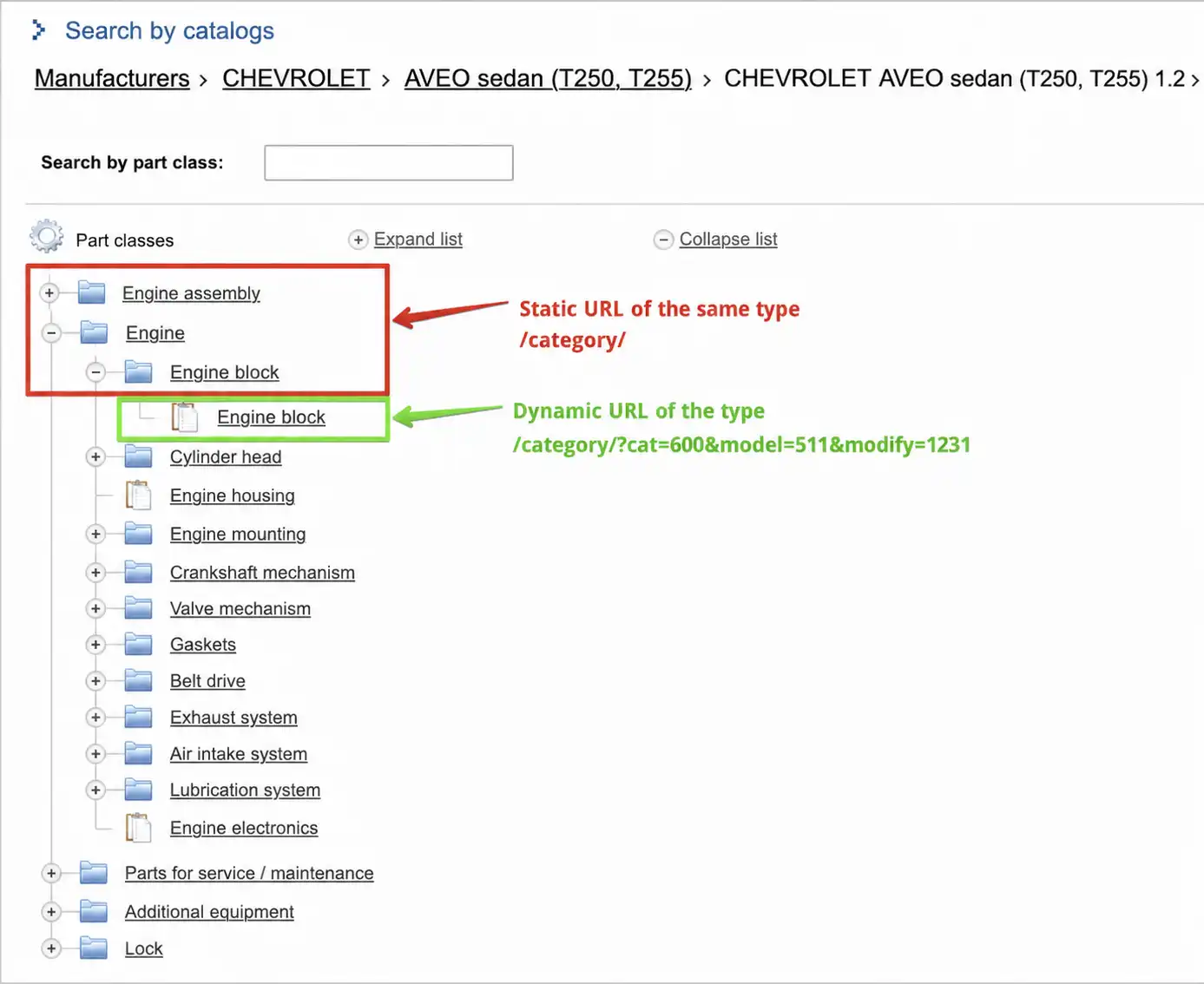
Catalog structure:
The problem was that the catalog was dynamic - everything was loaded through parameters, and that's why we couldn't optimize and index pages to capture mid- and long-tail traffic.
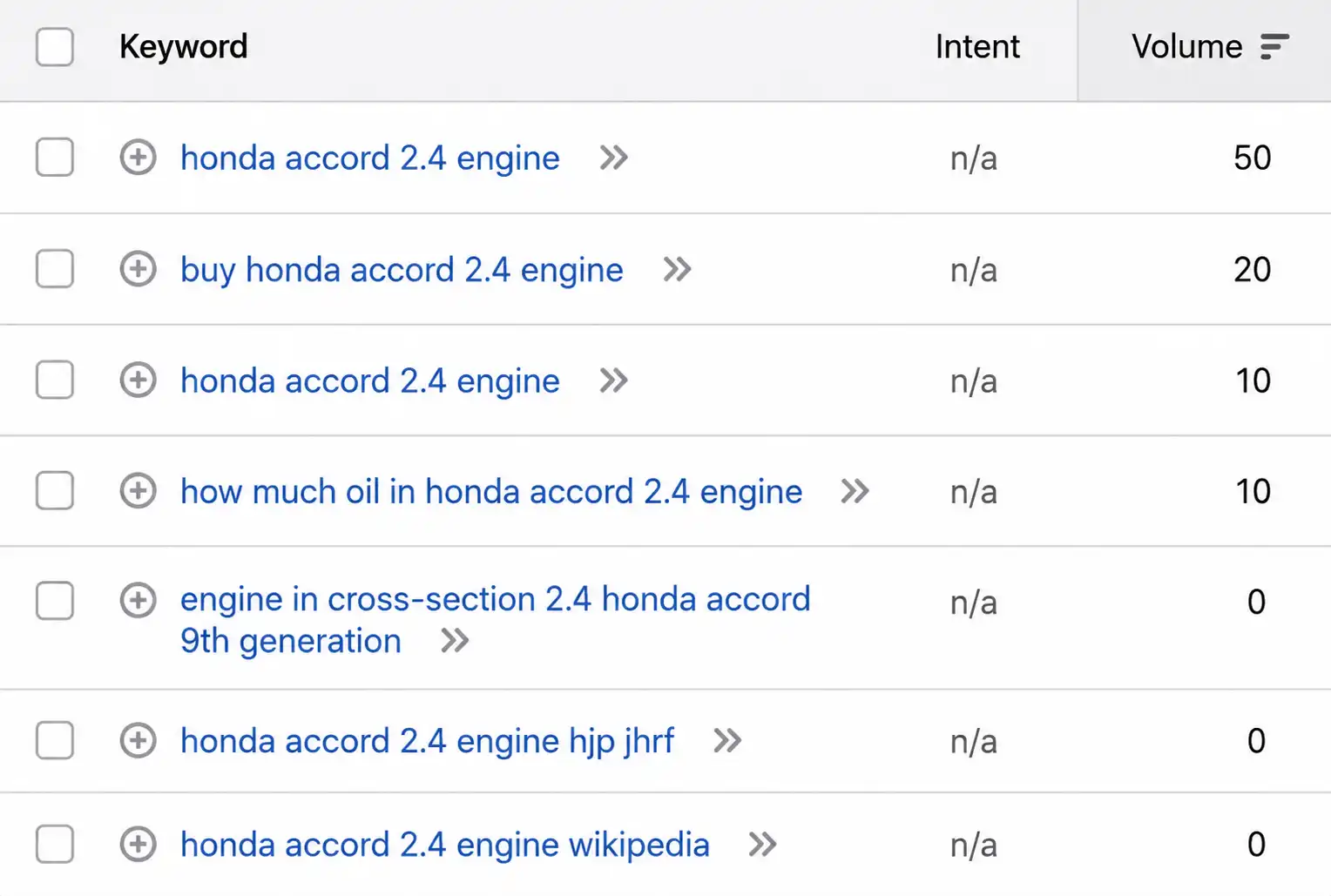
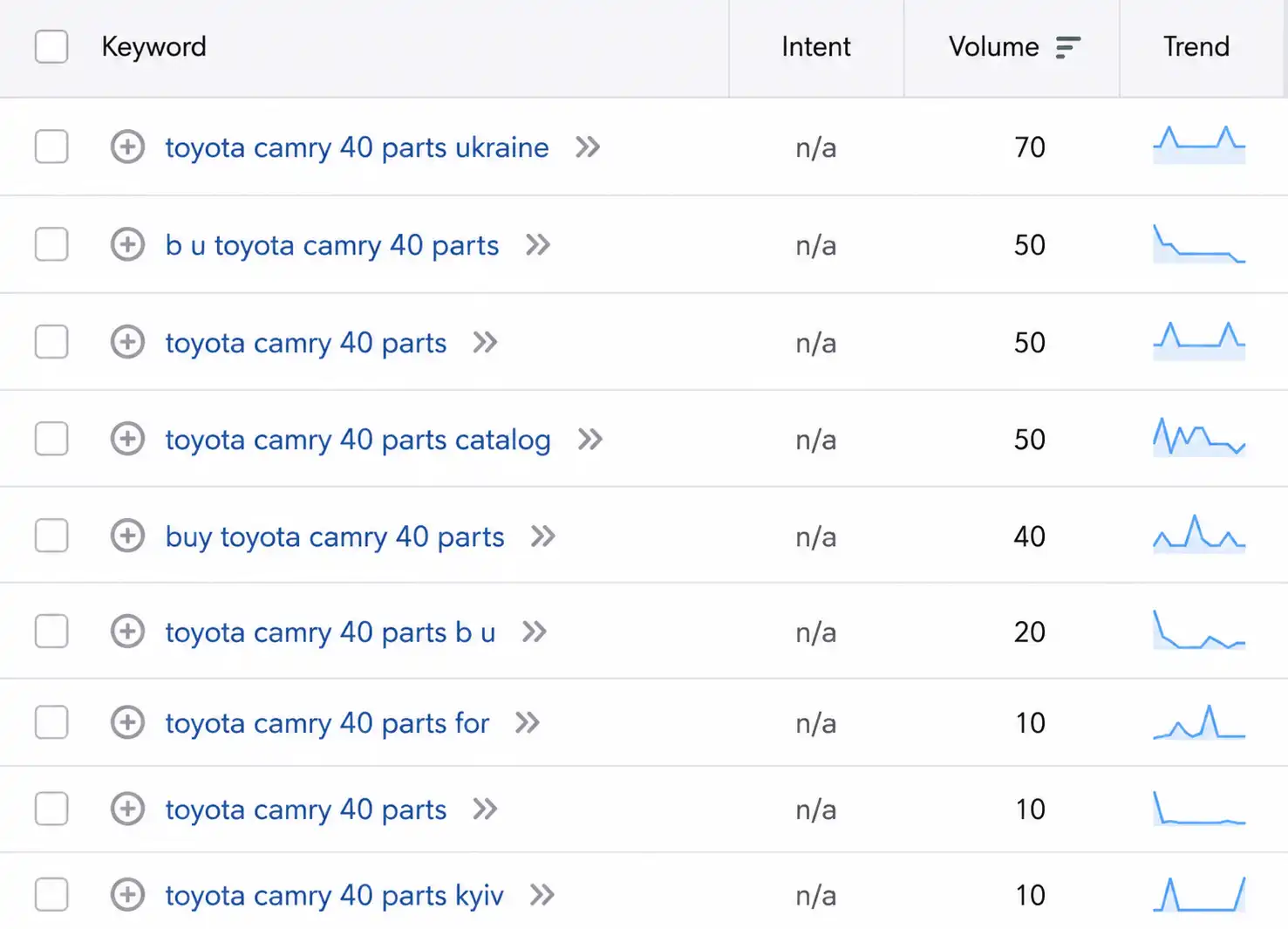
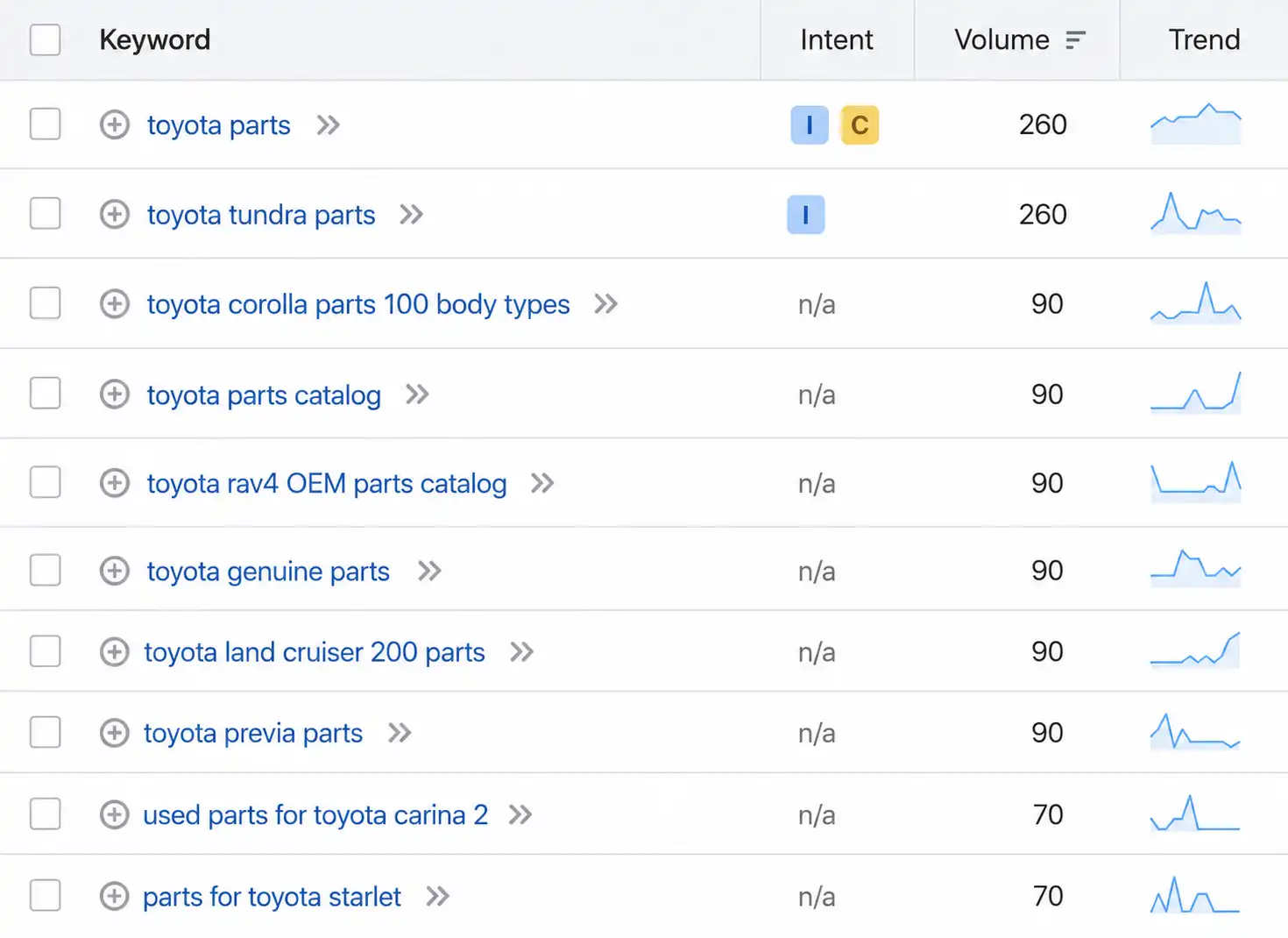
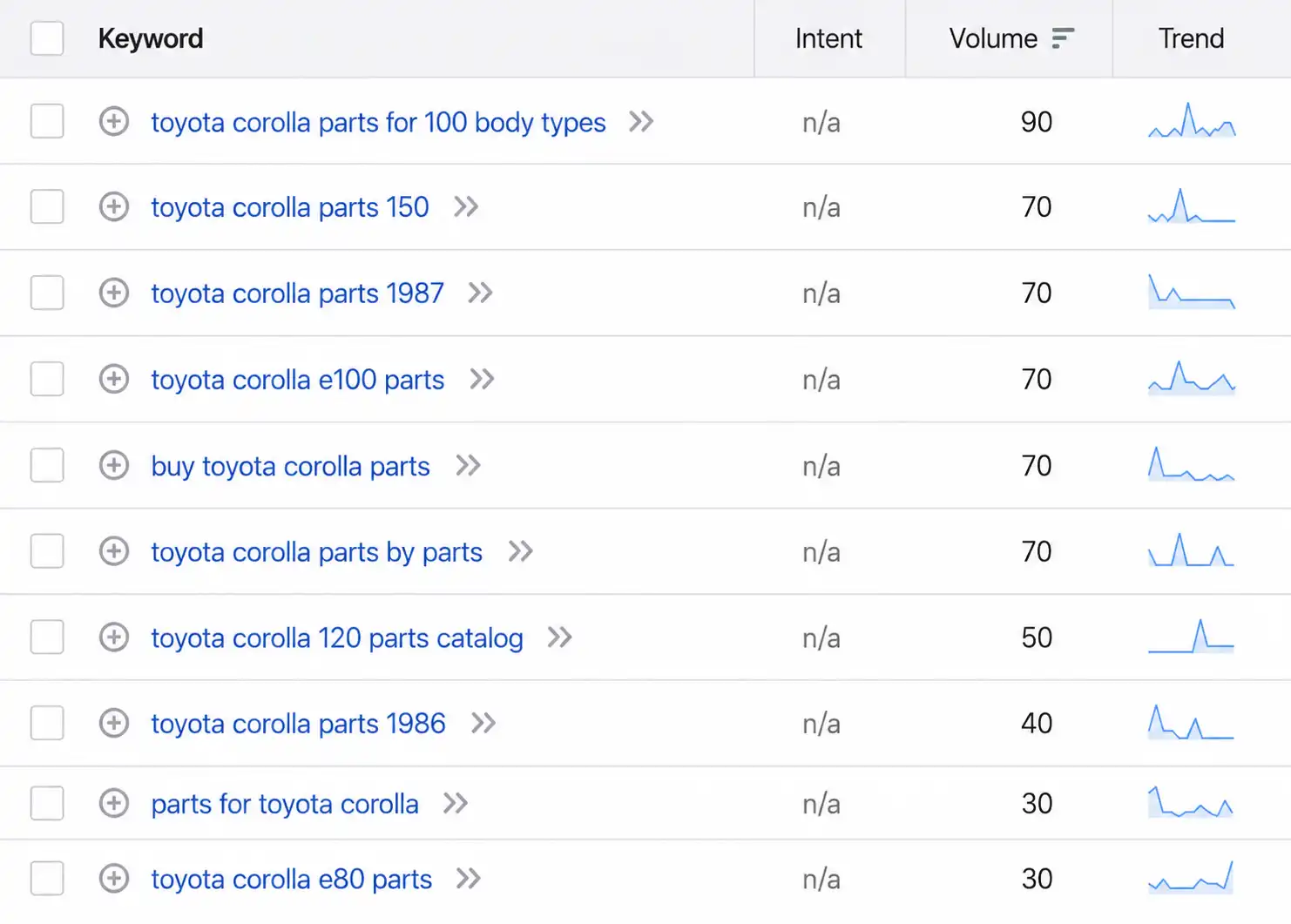
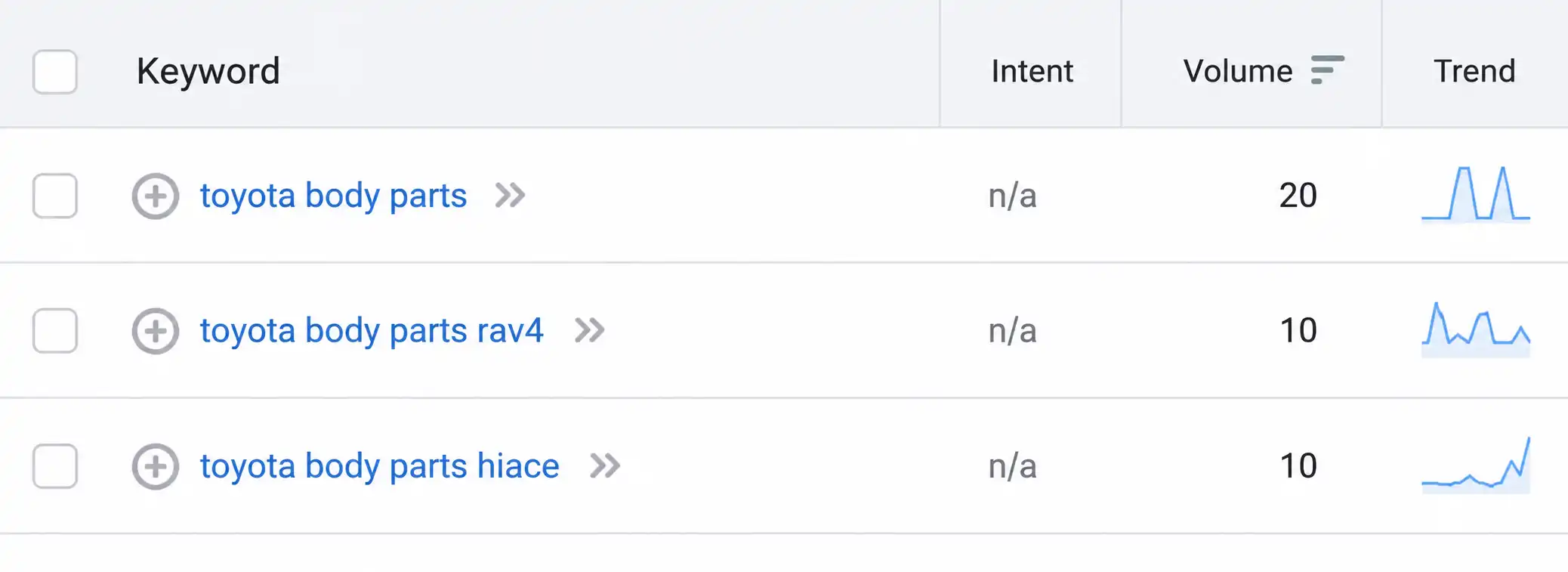
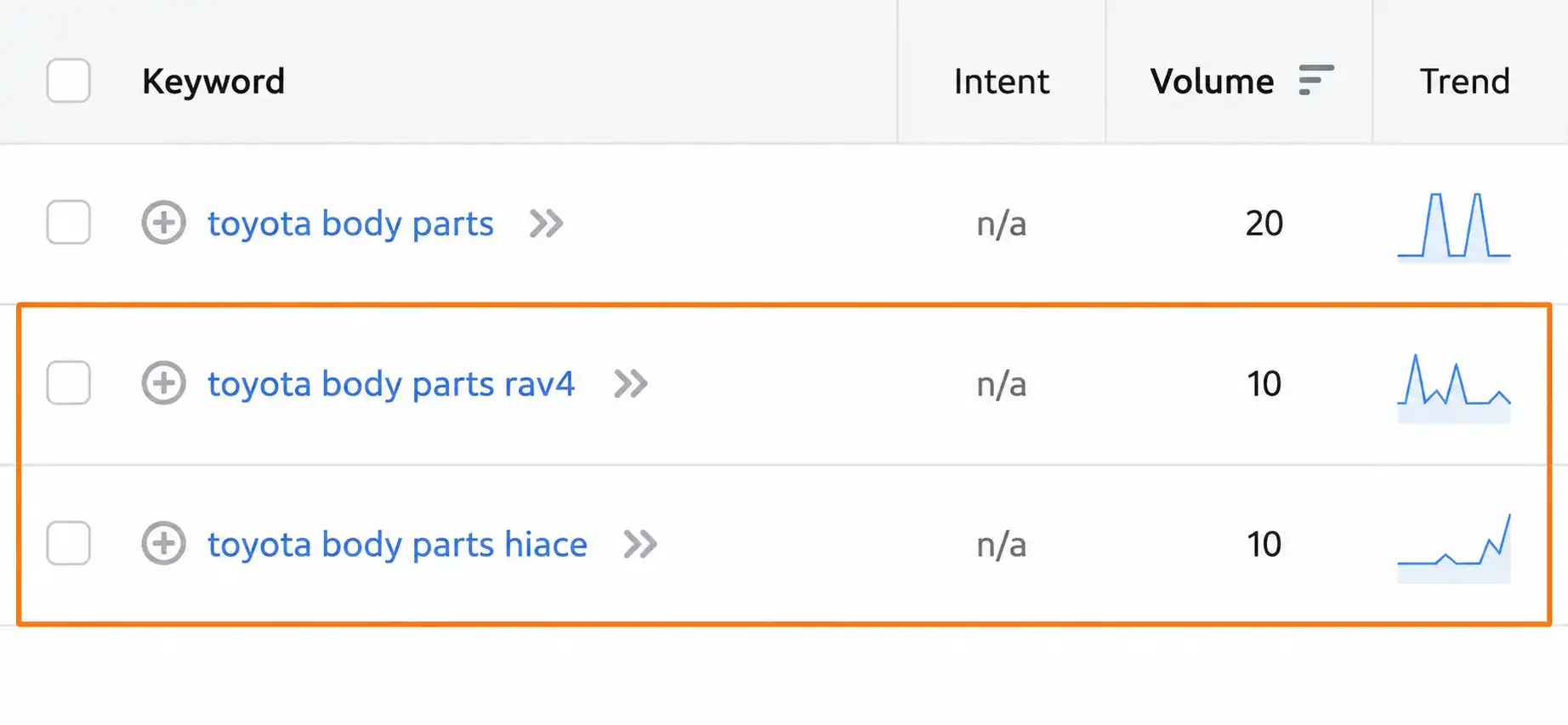
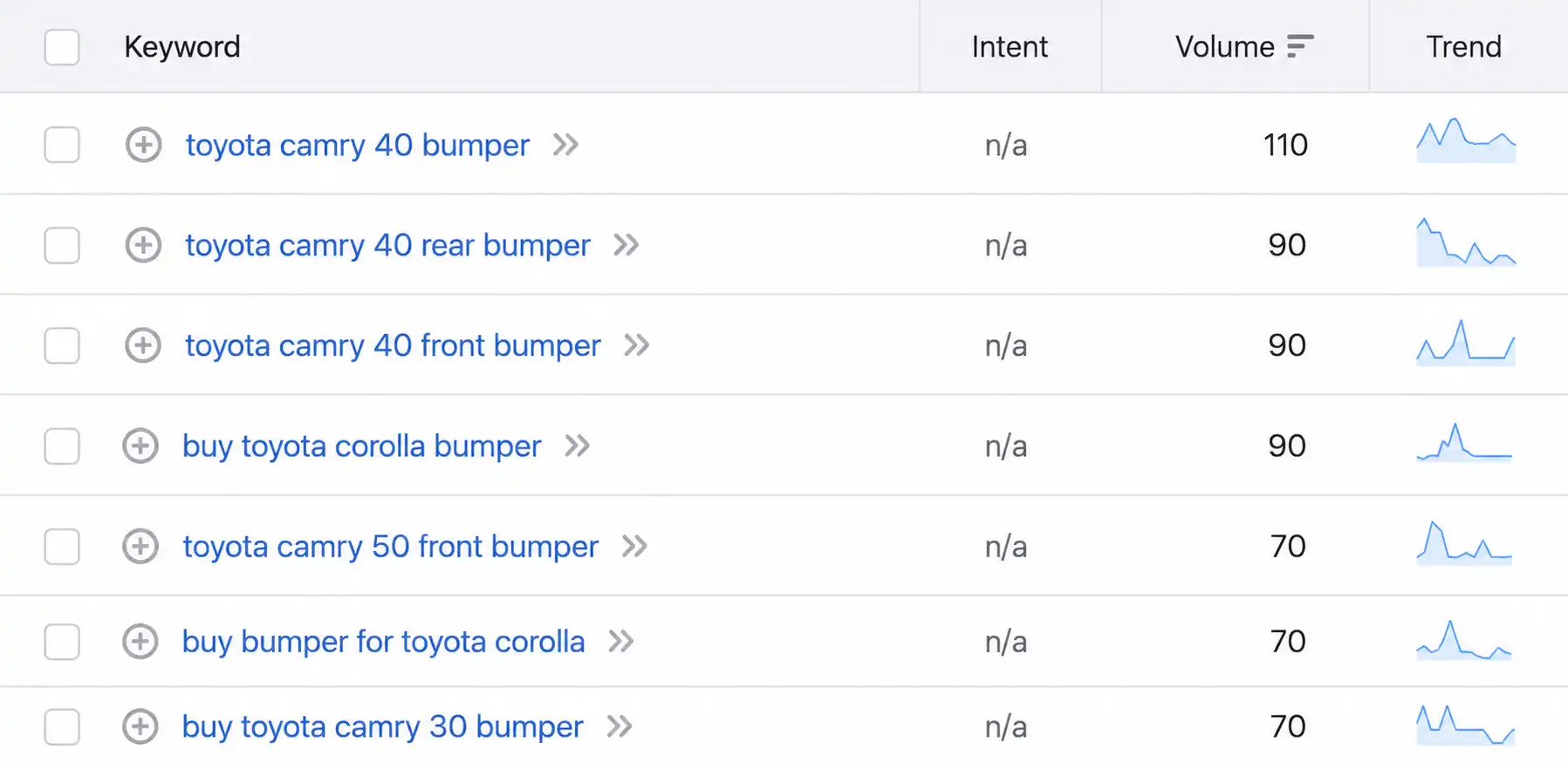
A few examples of auto parts searches on long-tail queries:
Example #1, where someone is looking for a part for a specific car model:
Example #2 in searches for parts for a specific car model:
As a result, we put together a detailed brief for the developers, where we spelled out what needed to change in the site structure to make it static and optimize thousands of mid- and long-tail queries to the matching landing pages.
This kind of traffic is more valuable than head queries because visitors come looking for parts for specific cars, which raises the conversion likelihood.
You can see an example of the brief for building a static site structure at this link.
- No way to set h1, title, description
There was no way to control these tags:
Set up automatic generation - for fast optimization of a large block of pages.
Manual entry - for the main sections and the car make pages, we wanted to set this data manually since there were a lot of nuances in search queries that an automated approach could miss.
We also had to fix some other issues:
Example of duplicate title
TOYOTA AVALON sedan auto parts TOYOTA AVALON sedan - the model pages, and the submodel page TOYOTA AVALON sedan (MCX1_) 3.0 had the same title.
This problem was solved during the optimization stage by rolling out a template-page optimization module.
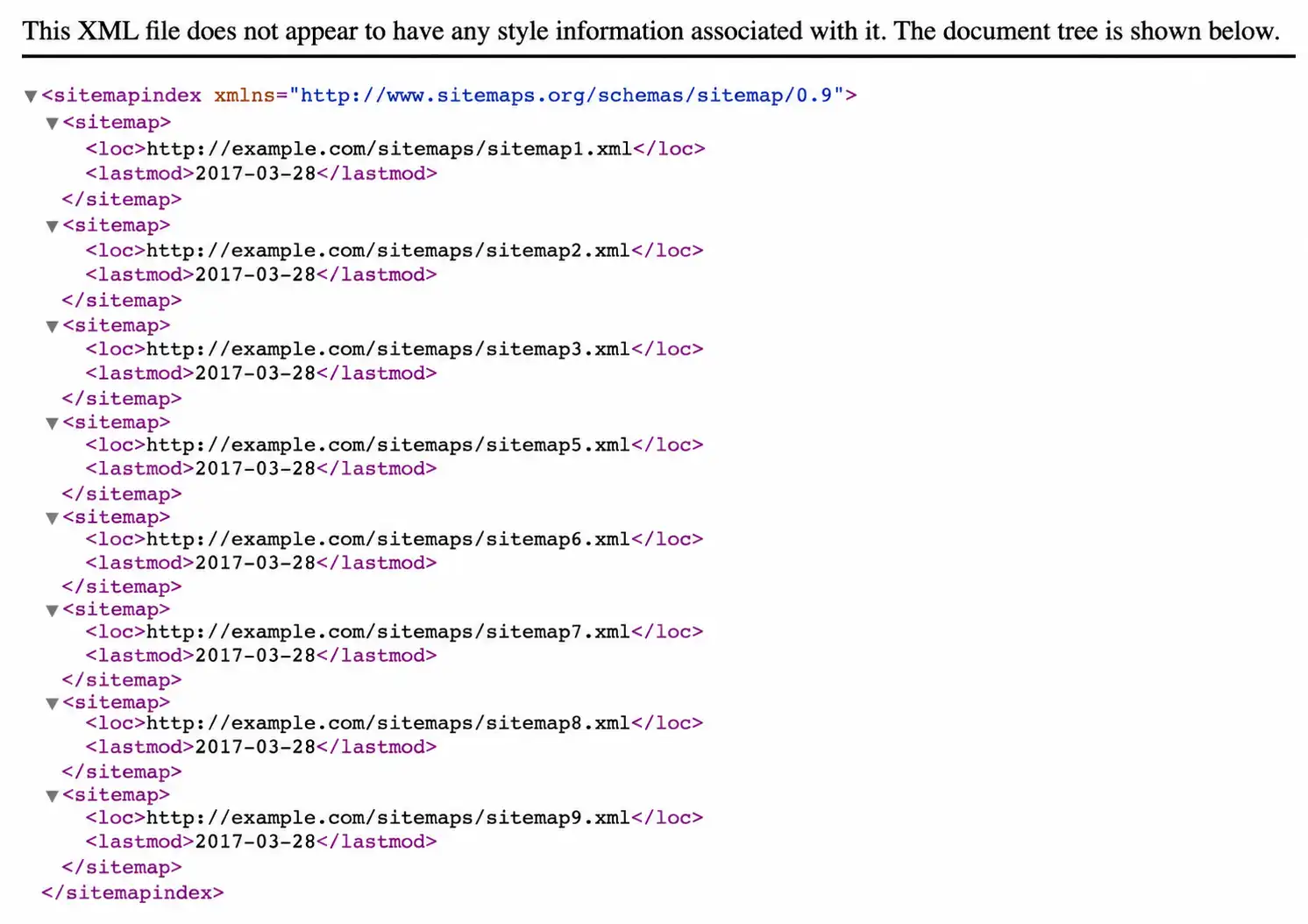
- Sitemap.xml
The sitemap on an auto parts store - and not just there - plays a huge role. The crawl budget is limited, and there's a high chance that a massive number of pages won't make it into the search engines' index, which means a big traffic loss and missed revenue.
Heads up
Let's recall what crawl budget is:
Crawl budget is the number of pages a Google search bot wants to crawl. In simple terms, there's a certain limit to how many pages Googlebot will crawl in a day.
Pay attention to the factors that affect the crawl budget:
faceted navigation and session IDs;
duplicate pages on the site;
404 error pages;
compromised pages;
low-quality content;
URLs that spawn new URLs.
The developers were given the task of generating a sitemap for the entire online store. The output was a sitemap made up of 32 maps.
Secondary mistakes that were made
Secondary mistakes that we fixed:
set up alt and title pulling for images;
set up SEO-friendly URLs - on most pages it was already in place; the issue was resolved once the static catalog structure was created;
separated title and h1 - on most pages they were the same to start with;
fixed metadata duplication on catalog pagination pages;
moved the car make catalog to the site's homepage;
improved Google Pagespeed performance;
handed developers a brief for setting up schema markup on the site;
added the site to Google Maps.
Out of all these points, we paid the most attention to the site's internal linking.
Important
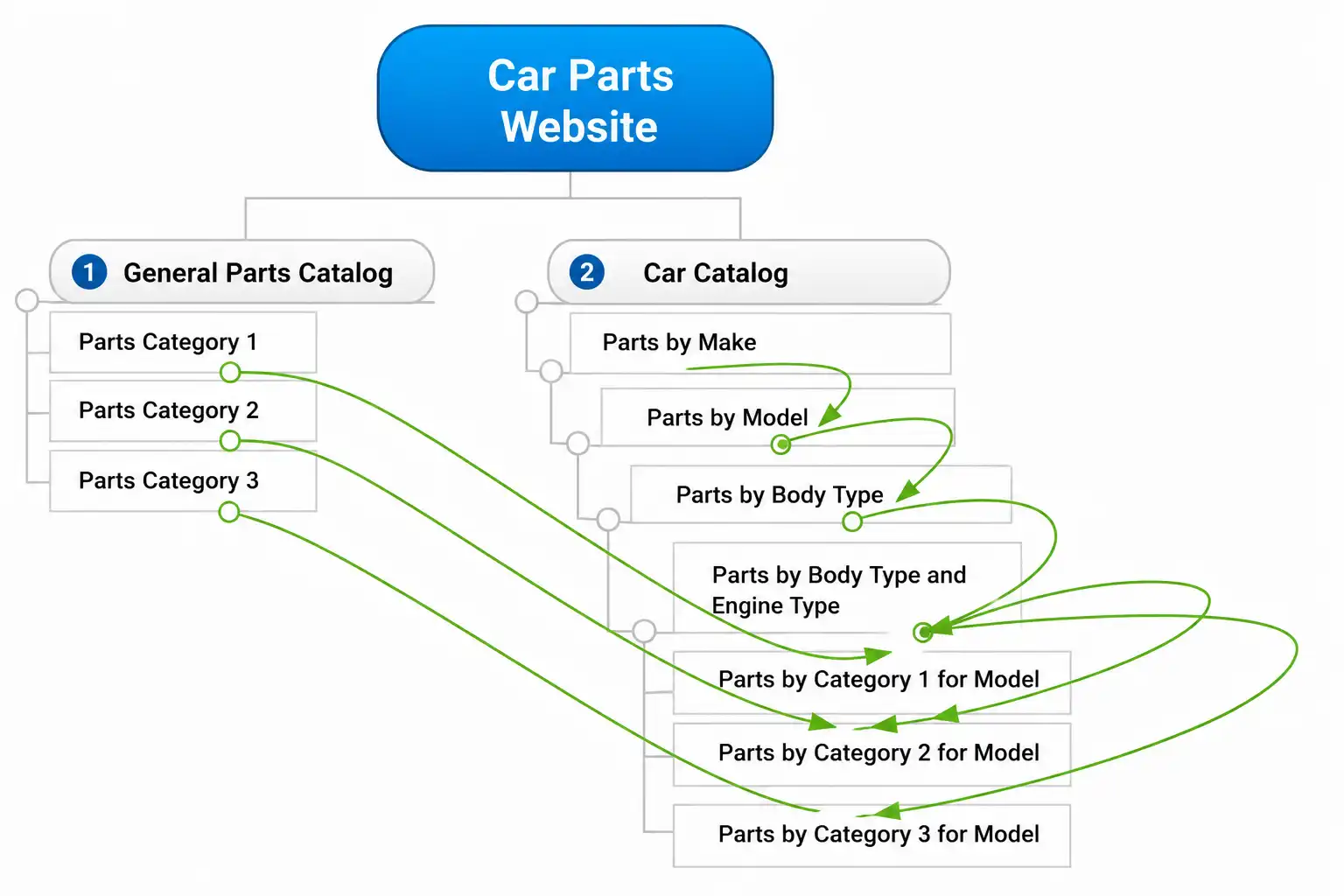
In an online store with hundreds of thousands of pages, internal linking plays one of the key roles. Through internal linking we improve indexing, give thousands of pages the chance to gain internal weight, and raise the chances of pulling traffic in the shortest possible time.
For this project we built the following internal linking scheme:
Semantic core - which queries work best for capturing mid- and long-tail traffic?
Based on the goal of capturing traffic through site optimization, plus the user demand analysis, we concluded that the initial focus should be on the following groups:
- spare parts + car make + name + applicability type
- spare part + model + name + part type for specific application + model + name
- spare part + model + name + part type for specific application + model + name
Going with this kind of strategy for putting together the semantic core fully paid off down the line.
Tip
When building an auto parts online store, design the site structure around keywords from the very first step. That way you'll be able to size up the potential of your store and the future scope of SEO work on the site.
If your situation is similar to the one described in our case, you'll need to set the optimization priorities. First, optimize for long-tail and mid-tail queries - usually this traffic comes in a few months after the site goes into the index. Once you start getting initial traffic and orders, you can move on to working on more competitive queries.
Two-stage SEO optimization of the auto parts online store
Optimization of the automotive online store with hundreds of thousands of pages happened in two stages:
Stage 1 - manual optimization of main pages for head queries
Stage 1 - we singled out pages with head queries that we worked on manually. These were the general parts categories (engine parts, body parts) and car make pages (Toyota parts, Skoda parts).
This stage went pretty fast - we picked the head queries, distributed them across landing pages, handed off briefs for the SEO copy. Once the content was written, we optimized the pages by hand.
Stage 2 - bulk auto-optimization of the catalog for mid- and long-tail traffic
Stage 2 - we singled out groups of pages we planned to optimize automatically. These pages are designed to capture mid- and long-tail traffic, for example:
car brand model pages (Toyota Camry parts, Ford Focus parts);
parts category pages for specific car models (Ford Focus engine parts, Acura MDX transmission parts);
specific part pages for a given car model.
This stage is more labor-intensive because it included additionally building many groups of pages (the most labor-intensive process at the second stage) and writing the templates for them for auto-optimization.
Clarification
By auto-optimization we mean filling in title, description, and h1 from templates. SEO copy isn't on the table at the second stage - writing descriptions for 200,000 pages, even at 1,000 characters each, isn't economically viable.
Templates for auto-optimizing the catalog
Together with the developers, we built a module that lets us run automatic optimization.
Optimization templates:
For car models
Available variables:
-
{$brand} - parts
-
{$model} - models
title: Buy parts for {$brand} at the [Name] auto parts online store
h1: Parts for {$brand}
description: Buy parts for {$brand} {$model}. Nationwide delivery from the [Name] online store.
For model + modification
Available variables:
title: Buy parts for {$model_detail} at the [Name] online store
h1: Parts for {$model_detail}
description: Buy parts for {$model_detail} with nationwide delivery at the [Name] auto parts online store.
For product categories
Available variables:
-
{$part} - selected category nesting
-
{$brand} - selected brand
-
{$model} - its model
-
{$model_detail} - model modification
title: Buy {$part} for {$model_detail} at the [Name] online store
h1: {$part} for {$model_detail}
description: Buy {$part} for {$model_detail} at the [Name] auto parts online store with delivery.
For a product
Available variables:
-
{$name} - name
-
{$brand} - brand
-
{$code} - code
title: Buy {$name} {$brand}, code {$code} - [Name] online store
h1: {$name}, code {$code}
description: Buy {$name} {$brand}, code {$code} at the [Name] auto parts online store with delivery.
Traffic results
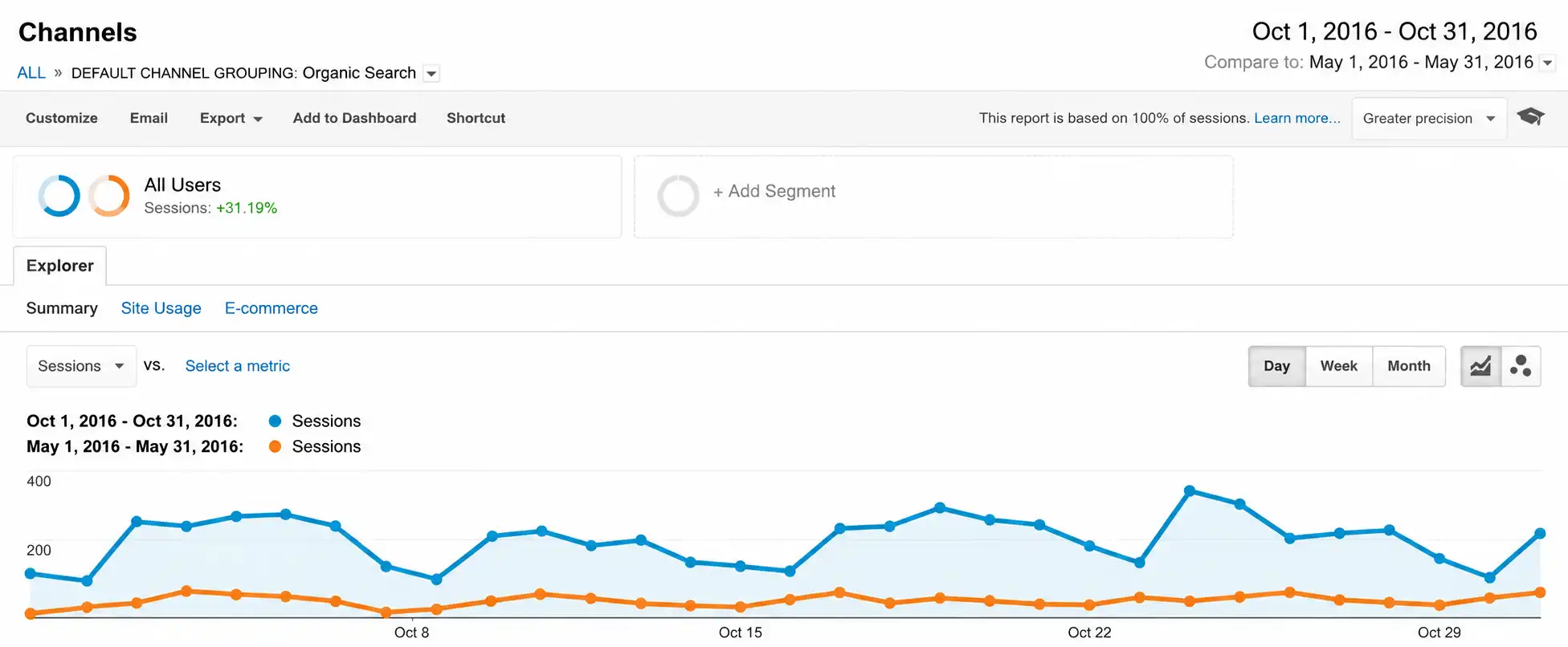
What was important for us at this point was, having optimized everything and sent the site to the index, to capture the initial mid- and long-tail traffic and reach the minimum payback level for the online store.
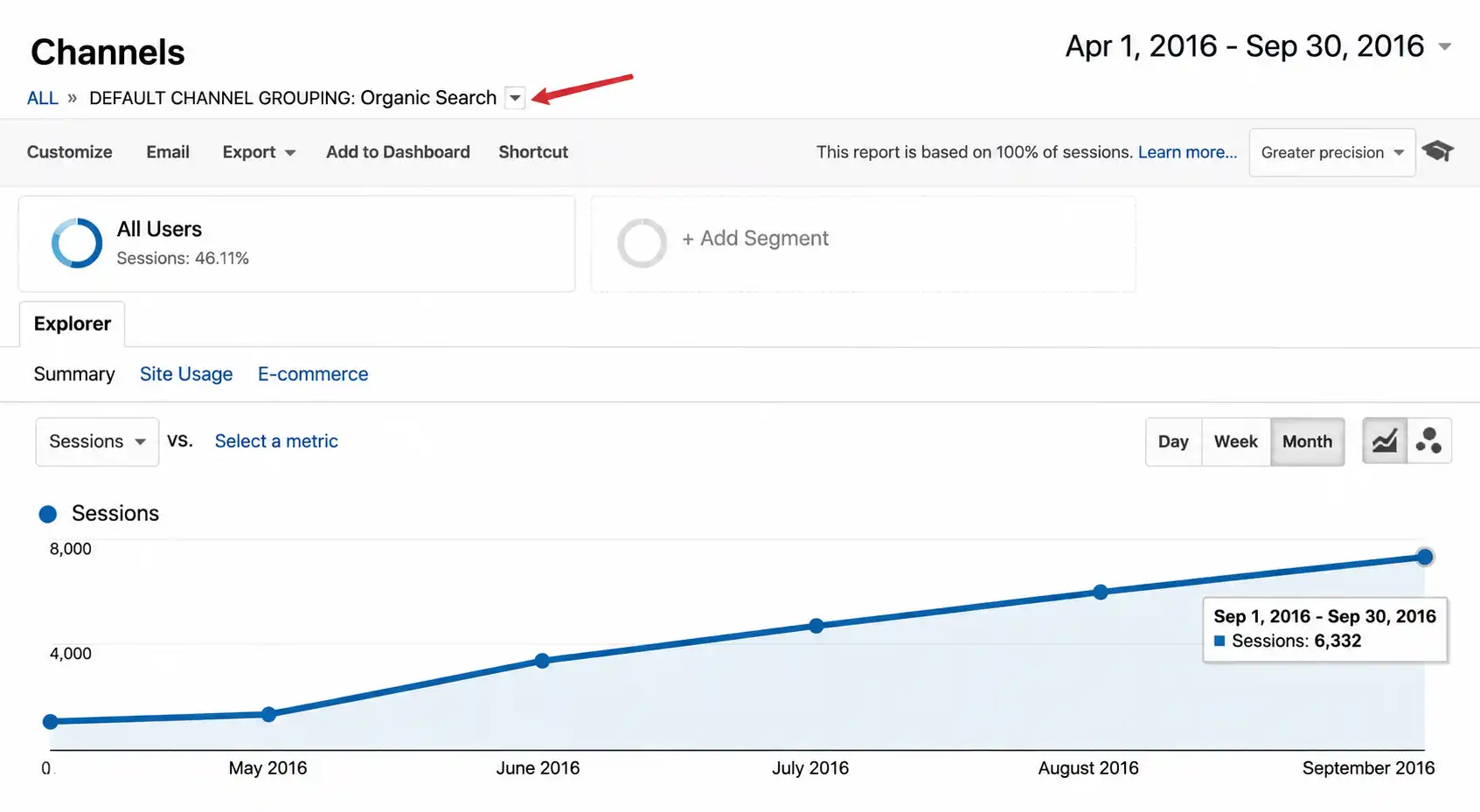
Result of optimizing the auto parts online store
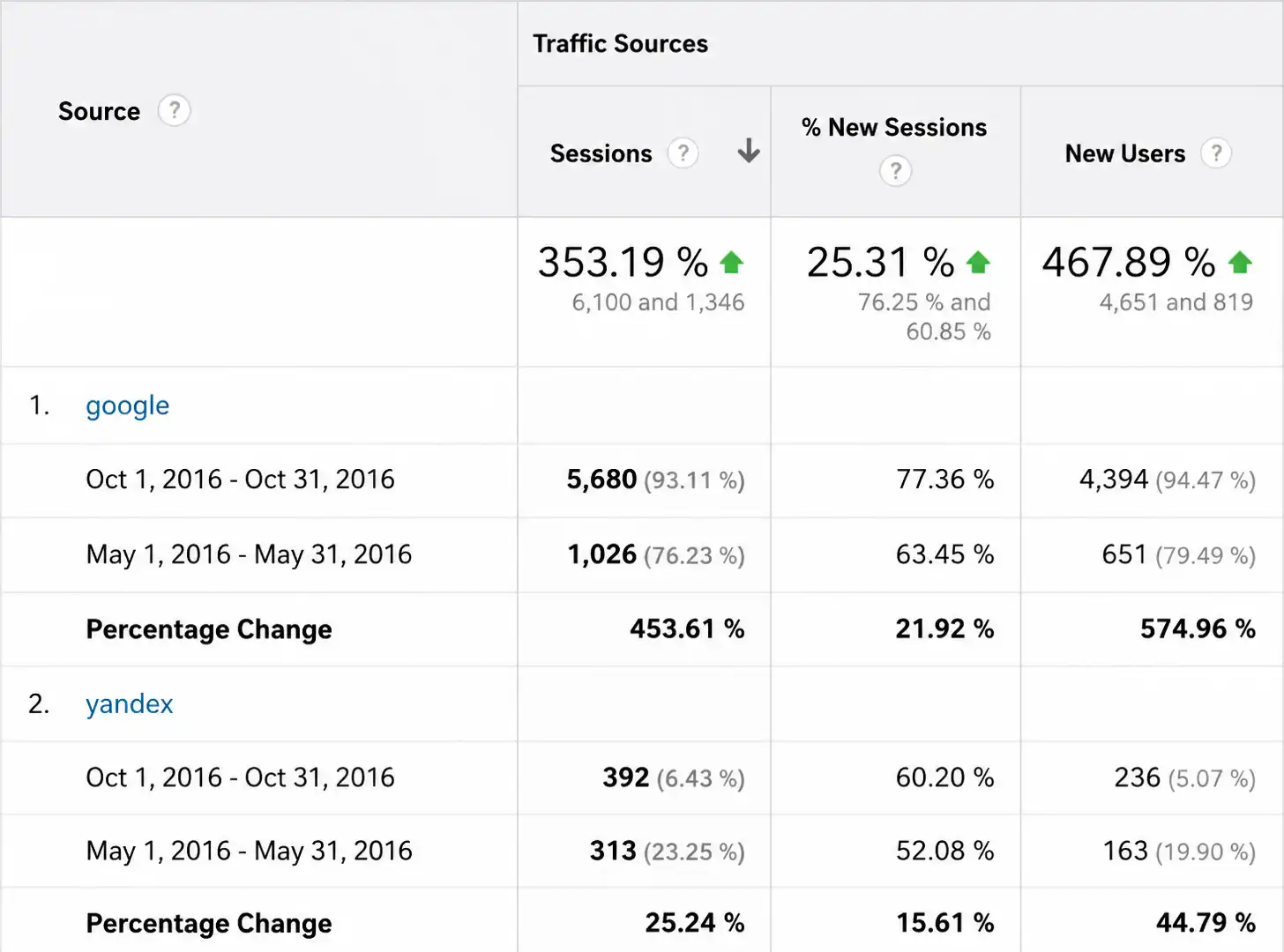
Organic traffic comparison
Conclusions
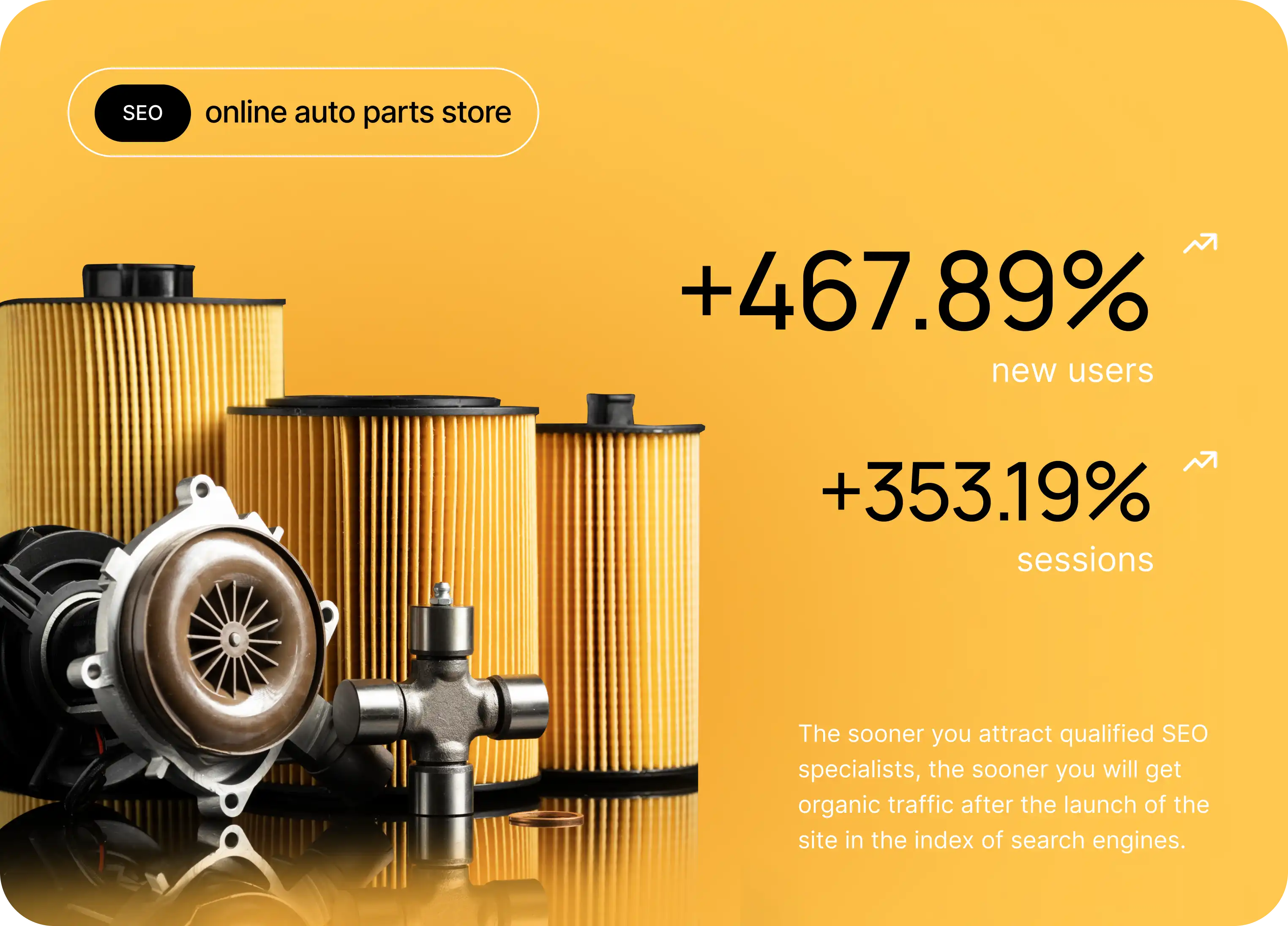
The key to a successful launch of an auto parts online store is the right approach to SEO optimization while the site is still being built. The earlier you bring in qualified SEO specialists, the faster you'll get organic traffic once the site is launched into search engine indexes.
 SEO services
 Google Ads